
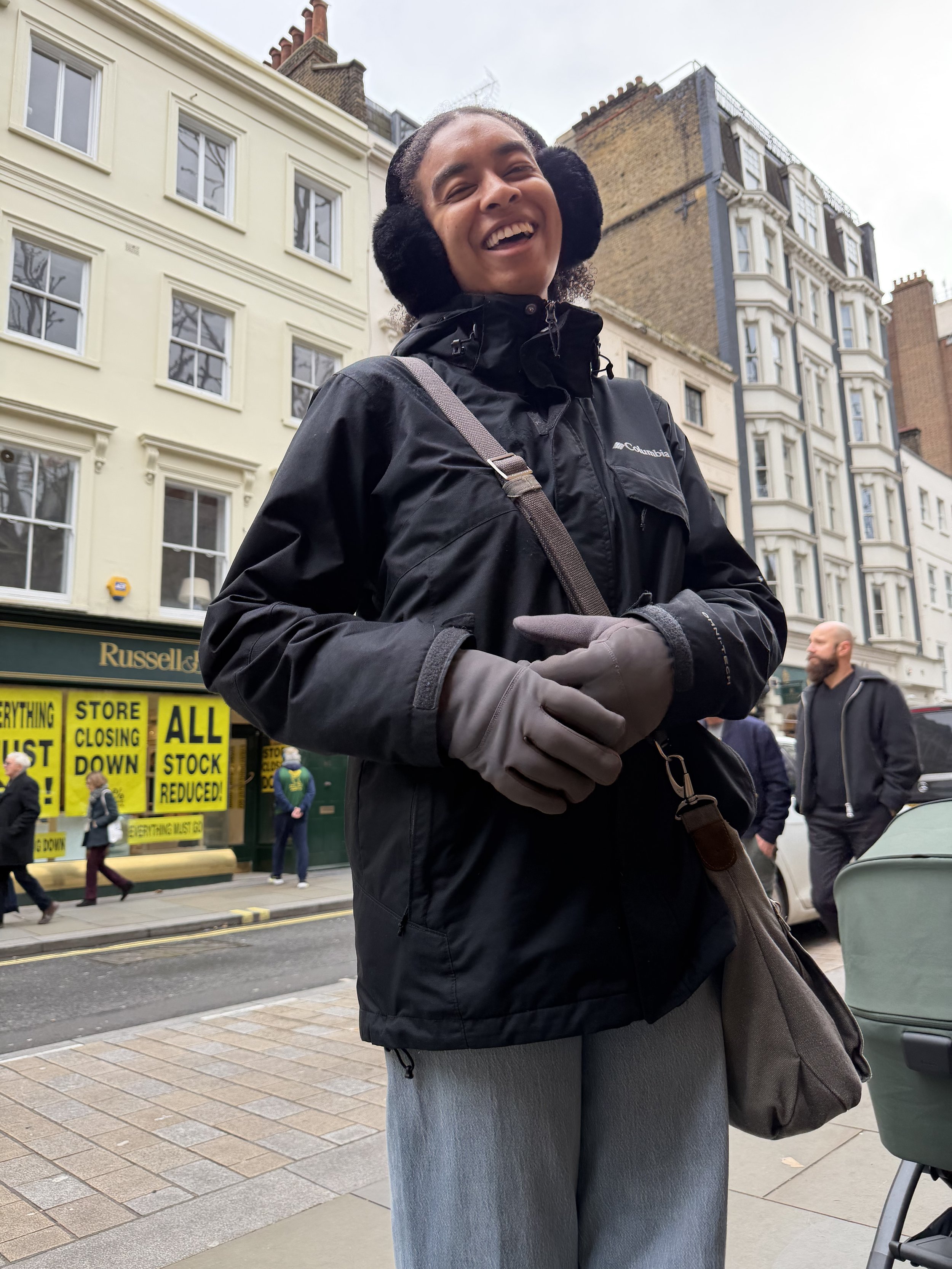
ON THE OCCASION OF MY DAUGHTER’S 18TH BIRTHDAY
I grieved for the child in me who wasn’t loved by their parents. I grieved for the child in me who saw and experienced more violence than affection. I grieved for the kid who saw more dead bodies than most. I grieved for all of the friends that I lost–I had (and kind of still do) have survivor’s guilt. I grieved for not being able to instantly be a good husband and father. I grieved for how much pressure I put on myself to be all things to all people, but never included myself in ‘all people.’ I grieved for prioritizing the function of being a man (provider, protector) and not the presence of one (kindness, gentleness,, affection).
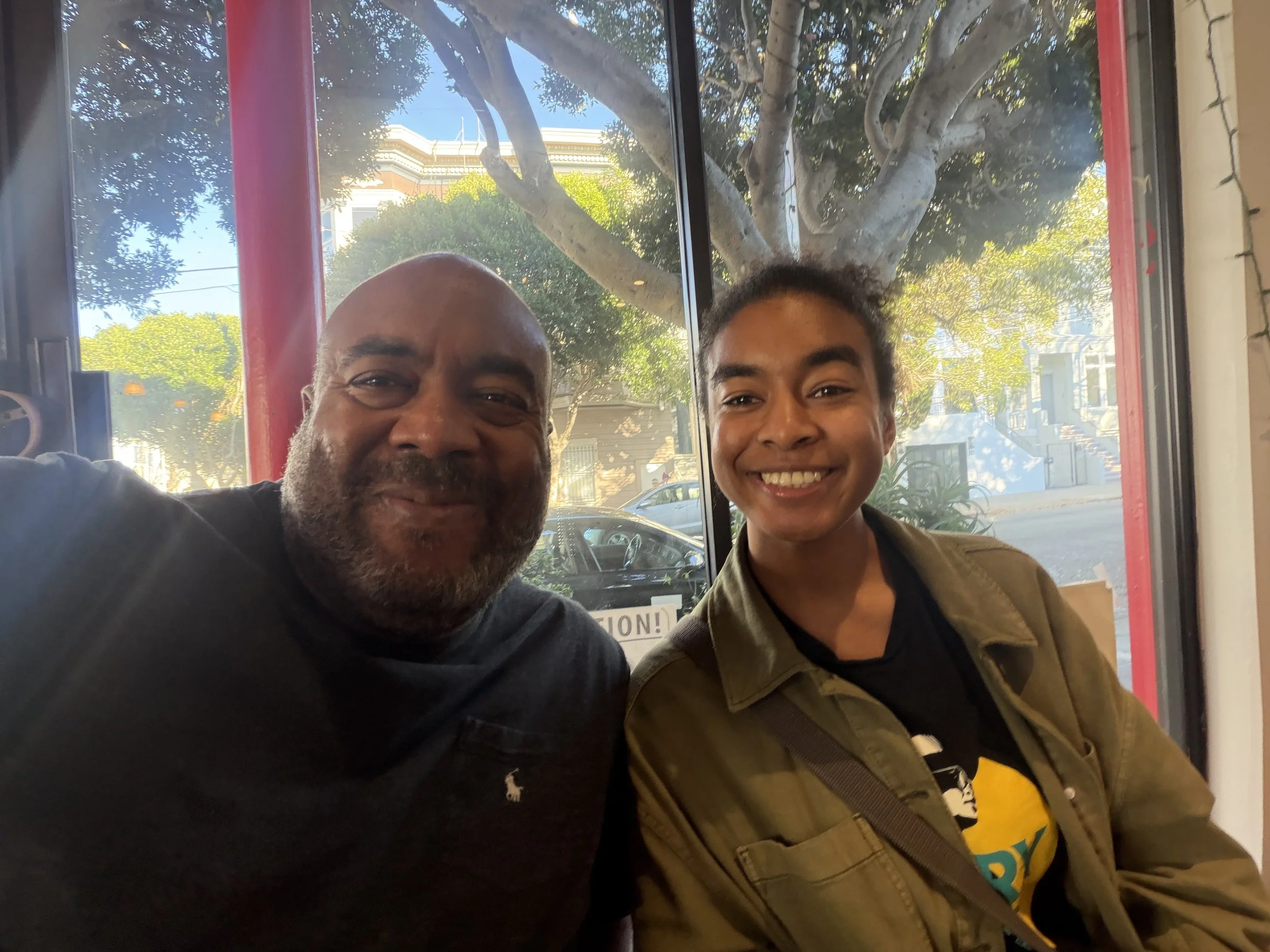
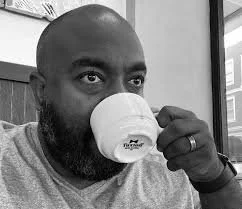
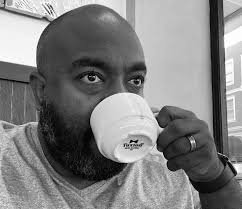
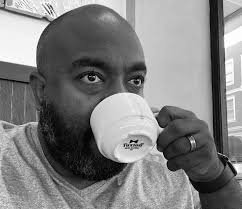
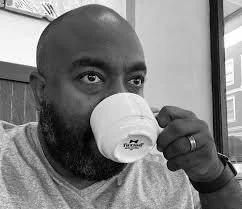
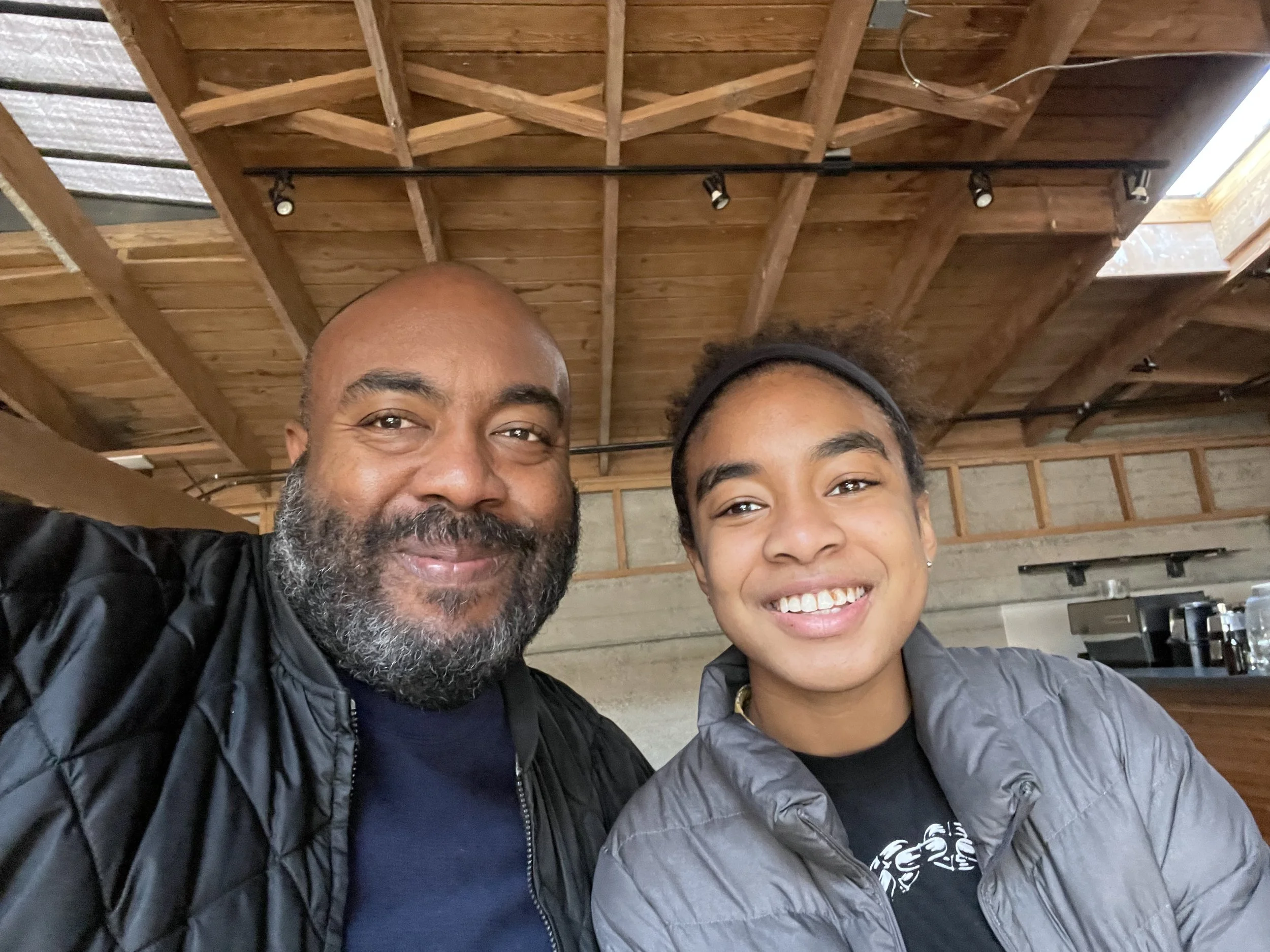
My daughter and I on our (semi) regular Saturday coffee shop vibe.
I’m feeling it. I feel it when I find it difficult to go to sleep, and then when I have trouble waking up and staying awake throughout the day. I feel it when it takes me longer to recover after a workout, when those kettlebells give me more trouble today, than they did the day before. I feel it when one more medication is added so I can maintain a baseline that hovers between not my optimum health, and not death. I feel it in my enlarged heart, the only inheritance my father gave me.I feel it when I open social media and find that another famous person, close to my age, has died and a little piece of my cultural self has died with them–like important books being removed from shelves. I feel it when another friend dies of a preventable disease. I feel it in the financial regret (and fear) I have because I didn’t save enough for retirement–which I am getting closer and closer to–because I didn’t believe I’d live long enough to retire.
I feel it most when I look at my daughter.
I never wanted to be a father. I was too afraid.. My childhood was so chaotic and violent that I did not dare to believe that I had what it took to guide a child into a healthy life. My parents were functionally useless, so I never had personal examples of what healthy and loving parenting should look and feel like. I carried so much anger and sadness and hurt, and I didn’t want to put that energy on and into a child. I wanted to protect the child I thought I would never have.
Then I met my wife.
All things being considered, we shouldn’t be together–and it most definitely shouldn’t work. And it almost didn’t, more than a few times. We each had our baggage (Hefty, not Louis), baggage that was seemingly incompatible. A project-born ostensibly parentless street-minded boy, with public television cultural dreams and desires meets a small town born and bred, science-minded orphaned girl at a poetry reading. A recipe for, not precisely disaster, but not exactly a smooth ride. We had many conflicts, big and small, but we kept at it. Love or madness (is there really a difference?) forced us to do that work. Several years in, we got that call. My wife’s doctor told her something that I pretended to be happy about: she was pregnant.
I was in shock.
I wanted to be happy, but fear curled in my gut and sat there–not bothering to pay rent–a squatter who took up more space than I could imagine. I pantomimed being happy–and a part of me was. A parent? Me? But what did I know about being a father? My father was more myth than progenitor. My mother was a creative abuser, and when she wasn’t trying to find new ways to hurt me, she neglected me. My grandfather, Roy, and my uncle, Maurice, were both dead. Two of the men I respected the most, I’d never be able to have their counsel.
No compass. No map. Uncharted territory.
When this beautiful girl was born, I had so many conflicting emotions that I cried. I cried, initially not out of happiness, but out of confusion and fear and worry. I am very skilled at worrying about the future, and the past, and the present. I am the final boss of ruminators. What was I going to do with this new life? This new life that was wholly dependent on my wife and I–for everything? I could barely keep a marriage going, how was I going to keep an utterly helpless human alive? Not only keep them alive, but help them to thrive, to be better than I was in that moment, in all my moments?
But we did it. I did it.
There were times, too many times, where I wasn’t the best father nor husband. I was short, untrusting, easily frustrated and wanted an unrealistic fantasy and not the beautiful reality I was living. Marriage and fatherhood felt like I was wearing the wrong set of clothing, with too tight shoes, walking in an unfamiliar alley, with no aim or purpose.
I allowed all of the things that had happened to me, the things that I witnessed, the unkindnesses and horrors, to write the script of my presence, in my family. I was on trauma autopilot and despite my wanting to break negative familial cycles, I (most likely) reinscribed them with my particular type of calligraphy–probably added a new cycle, or two. I was a wreck. I had mastered being the provider. I’m a worker. Even now, there are few people who can outwork me. I can and will put in the hours. This was one thing I had almost full control over. But turning off that part of me, that nose to the grindstone energy, I couldn’t think of anything more frightening, more disorienting. Who would I be If I wasn’t trying to simultaneously suppress and run from the years of trauma I had pent up inside? Who would I be if I actually stopped to feel the moment, instead of ruthlesslessly looking towards new horizons?
But stop, I did.
I did my own therapy. My wife and I did therapy together. Even if we weren’t going to be together, we had to work out our shit so the only thing we wouldn’t pass down to our daughter would be our dysfunction. The work was hard, but necessary. Knots of fear popped up throughout my body when the therapy seemed to be telling us that we shouldn’t be together. That there was too much damage between us to even attempt to repair. Maybe we’d just reach a point where we could separate without it being explosive? Maybe maintain a friendship? Be fantastic co-parents?
But something happened.
We got better. I got better (not perfect, but better. Still trying, every day). We put in that work. I put in that work. I was holding on to so much stuff, stuff that I felt made me who I was, but that was the question, wasn’t it? Who would I be, who could I become, if I didn’t have all that rotten and festering shit inside of me? How much easier could I move without all of that restricting my progress? How much better of a husband would I be? What kind of father could I be? The archeology of the self is a painful, but necessary process. I wish I could attribute my change to some kind of giant cosmic intervention–some sort of complex therapeutic intervention. But, no.
I grieved.
I grieved for the child in me who wasn’t loved by their parents. I grieved for the child in me who saw and experienced more violence than affection. I grieved for the kid who saw more dead bodies than most. I grieved for all of the friends that I lost–I had (and kind of still do) have survivor’s guilt. I grieved for not being able to instantly be a good husband and father. I grieved for how much pressure I put on myself to be all things to all people, but never included myself in ‘all people.’ I grieved for prioritizing the function of being a man (provider, protector) and not the presence of one (kindness, gentleness,, affection).
I grieved, forgave myself, and let all that shit go.
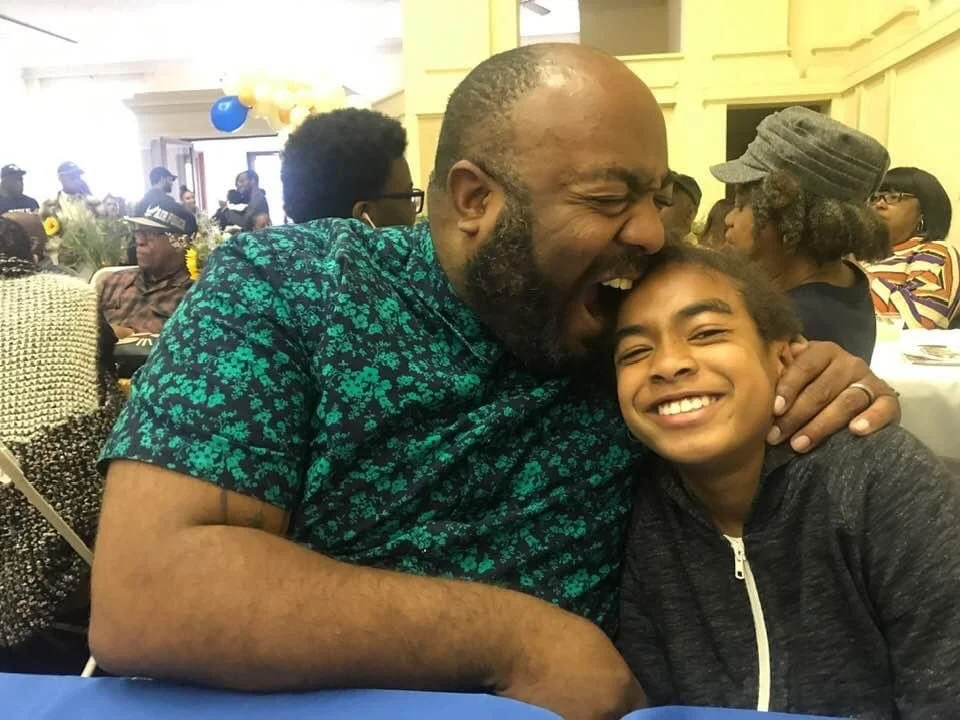
I won’t say the changes were instantaneous, but they were noticeable. My wife and I spent more worthy time together–not just being together for the sake of the illusion of a decent marriage, but cuddling and laughing and lunching and farmer’s marketing. My daughter and I became closer. We went out, by ourselves, without her mother acting as a buffer. Our home filled up with near-constant laughter, every day. We went out as a family, having the best time. But the big thing, the thing that made me realize that everything was heading in the right direction, was when my daughter remixed our relationship.
My daughter started asking for my counsel.
It started with her asking broad philosophical questions. Then these questions became personalized. She was giving me explicit invitations to enter her world. When your child does this, it is a crucial moment–it is so easy to fuck it up and have them cut you off. This ontological invitation, this permission to see the world through her eyes fundamentally changed who I am as a person. I did my best not to offer advice. Never in my life had I pulled so hard on my BA in Philosophy so I could fashion questions and scenarios that were both valuable and egoless. I worked hard as hell to decenter myself, not to fall into the ego trap of Ha! She wants my help! See? I am worthy! I am dad! I felt the shift from side-eyed authority figure to trusted confidant.
I have never been so grateful in my life. Gratitude has become my default setting within my family.
I did grieve the ruptures that my daughter and I had. I do grieve for them. But they no longer impede my progress or act as barbed wire between her and I. I have ratcheted down my rumination and self-flaggelation. These ruptures have been transmuted into lessons of what not to repeat. Things that have happened, but have little impact on the future we are building together. And we’re heading into this future and mach 5.
I am writing this one day before my daughter’s 18th birthday.
It’s not like I think turning 18 confers some kind of magical cloak of maturity. I don’t believe she will instantly become an adult. However, over the past half year we’ve traveled the U.S., and internationally to look at universities. In just a few short months, my daughter will attend university. She will be writing the first chapter of her new life–but we’re geeky, so she’ll be illustrating the first panel of her graphic novel. We will not see each other every day. A key piece of our small but mighty family will not be there. Of course we’ll communicate, but that comfortable and loving rhythm will be disrupted. Possibly forever. Yes, I know we’ll create a new rhythm. My wife and I will have more time and space to reconnect, to rediscover each other. I am looking forward to that.
But I am going to miss my baby.
I hope our healing carries her forward into her best possible life. I hope the lessons will give her comfort and strength and resolve and bravery. I hope she comes home and asks me a question so deep that we have to go out for boba and let the hours fall away as we discuss it. I want her to know that I am healing, mostly healed, and our relationship has been instrumental to this. But most of all I want her to know, in her heart, that no matter where I am, I am there for her. I want her to be confident that she can rely on me for the rest of my life.
I want her to know, need her to know, that I am her dad and I love her.
I am feeling it. The impending loss. The reduction of laughter, in the near future. I’m dreading the empty nest. No more school plays. Hell, I’m even going to miss having to hold my daughter’s teachers accountable for their shit pedagogy. This is all present and true, but most of all, I am feeling wave upon wave of gratitude. I feel grateful that my wife and I got our stuff together and how this has buoyed our daughter. I feel grateful that we’ve raised her brave enough to want to venture away from home to go to uni. I feel that my grief and mourning has finally become empowering, not debilitating.
I feel the most grateful that my daughter, our daughter, is the spectacular human she is. I feel grateful that she knows who she is, and isn’t shy about leaning into her full powers and prowess. I feel grateful that I have never been responsible for clipping her wings, but have always encouraged her to fly–even if I wasn’t terribly gentle in my instruction. But if I had to boil all this down, I feel that the first 18 years of my daughter’s life are years she can look back on and know, without any equivocation, that I did all I could for her to move into her future, without my past being the barrier.
Live your life, my heart. Make your own mistakes. Avoid my mostly crooked footsteps. But most of all, understand that I am who I am now, because of my relationship with you.
Here’s to 18.
A Day At The Park
A Day at the Park
[This essay originally appeared in the 2011 anthology Rad Dad: Dispatches from the Frontiers of Fatherhood. I post it here because I feel racism nd distrust has only increased since my daughter was this age. Sickens me I also want all my readers, of all colors and cultures, to understand how things like race can impact parenting, and how we’re seen as parents.]
1. I’m unsure why, but I get asked—quite often—about the hardest part of being a father. The people who ask me this are almost all younger cats who are about to become fathers or are there already. That question is a Pandora’s Box. Being a father is hard in a million different ways: Balancing fatherhood with partnership; being able to do the things that I love to do on a consistent basis (for example, writing—I’m writing this at 3am, while everyone is asleep and I have a moment to myself); the loss of money; having to send your child to childcare because both parents have to work to afford all the additional costs. Working all day, coming home at night and only seeing your child for forty-five minutes before their bedtime—in these ways and more, daddyhood is hard as hell. But none of this (yes, even the money problems) even comes close to the raging difficulty of being a father of color.
2. Being tattooed, visually Black (I’m half Jamaican and half Puerto Rican), over six feet tall and muscular, holding a little ethnically-ambiguous toddler makes many people double, triple, quadruple take—and also, for some odd reason, loosens tongues, mostly of white folks, and creates an environment of familiarity. And yet they still manage to see me wrong: In my daughter’s twenty-two months of living, I have been labeled ‘uncle,’ ‘babysitter,’ ‘guardian,’ ‘cousin,’ but never father. I can’t tell you just how crushing a blow this is. I LOVE being a father and I think that I am becoming a better one by the day, but to have one of my greatest joys discounted is painful.
3. Do we really live in a society that is still stuck in the lie that Black men cannot be fathers? Well…I must admit that I was on that same shit for a while. When my partner told me she was pregnant, I had fears that, at the moment of birth, a Greyhound ticket would appear in my hands and I’d leave my partner and new child to fend for themselves. I thought I’d become an absent father sleeper agent—the baby’s first cry would activate me and my mission would be to get as far away from mother and baby as possible. Because, throughout my whole childhood, I never once had a friend or met anyone (of color) whose father lived with them, or in some cases, even knew who their fathers were. There is a generation of brothers and sisters born after Viet Nam and before the release of Ghostbusters that are a tribe of fatherless children. My own father, I saw the bastard five times in my life.
4. People mistaking me for everything but being a father almost invariably happens at the playground. While the mothers (rarely do I see fathers at the playgrounds—but it could be where I choose to let my daughter play) are sitting in groups, either texter-bating or focusing intently on some new piece of thousand dollar baby gadget—I’m in the sand, on the structure, kicking the ball. I’m playing with my kid. Over at this park in El Cerrito, California, I was teaching my daughter how to hang from one of the monkey bars. She is a ridiculously daring kid and will try anything, as long as it is dangerous. This kindly older woman (dressed up like a fashion model to go the park) smiled at me and said, “My uncle used to do the same thing for me. He always let me do the things that my father would never let me do.” She drew out the “never” as if I was tossing my daughter over an open lion’s mouth. I told this woman that I was an only child, that my kid didn’t have any uncles, and that I was her father. She glanced between my daughter and me several times, and finally said, “Noooooo.” Wow.
5.When I think about it more, not being recognized or acknowledged as my daughter’s father, while painful, isn’t nearly as crazy as being a man-of-color at a park. When race, size, gender, and how we dress intersect, it disrupts social fabrics. Like I stated earlier, I play with my kid while at the playground. And if my daughter decides to play with other kids, I play with them too. I don’t touch them, because you just don’t do that—you don’t touch other people’s kids without permission. One day I was kicking a soccer ball with my daughter and some other little kids she was playing with. One of the kids, a blonde, vacant-eyed little girl, tripped, fell down, and scraped her cheek on the wood that bordered the play area. I helped her to her feet and asked her if she was okay. She looked over at her mother, who was starting intently at her cellular phone, and got nothing. She then looked at me, I looked at her, and she wailed as though the end of the world was nigh. The cellular mom looked up, fixed me with the most baleful stare, and ran over to us, dialing her phone. Instead of asking her daughter if she was okay, she snatched her up by the arm and thrust her behind her back. I then hear her telling her husband “this big nigger just pushed Miriam to the ground.” Unbelievable.
6. I gathered our things, and made to leave. This lady then blocked our way. “You can attack a kid, but now that my husband is coming you’re trying to leave? You’re not going anywhere.” She then put her hand on my arm and tried to stop us. All the while my daughter is getting freaked out because she is very rarely exposed to yelling or overt signs of anger. Being who I am, I figured, “Let’s see how this plays out.”
7. Three minutes later, an SUV pulls up and this really fit dude pops out of the truck and comes barreling towards us. I see that he has his fist cocked a little. I put my daughter down and send her to go and play, which she was grateful for. I could feel just how tense and anxious she became. This guy comes up and started screaming at me. Before fatherhood, I would have gone at him, but I have been trying to change that part of myself; violence is a social ingredient that I am weaning myself from. When he finally paused, I asked him did he think that yelling and threatening me was going to do any good? I then asked him why neither he nor his wife had asked Miriam what had happened. I then asked them, “If I were a white dude, would you still think that I pushed your daughter?” That stopped them. All this time that the silly adults are going at it, little Miriam is clinging to her mother’s legs, terrified. “Your daughter fell, and I helped her up.” I focused on the mother: “And if you weren’t so busy looking at your phone, if you were actually parenting, you would have seen what happened. Better yet, it might not have even happened if you were playing with us.” Then I looked at the dad: “I can appreciate your concern, but if this is how you react to situations you know nothing about, you might get hurt. If this was two years ago, I would have beat the shit out of you for yelling in my face and pretending like you were going to do something.” I then bent down and asked Miriam if she was okay. She looked at her parents, and then at me, and nodded. I took out a wipe and wiped her scraped cheek. “Does it feel better now?” She nodded. I gave her dad the dirty wipe, and went to go and play with my daughter.
8. That encounter still nags at me on a number of different levels. Miriam’s parents never answered my question: If I were white, would they still have accused me of hurting their daughter? My honor as a father and as a human being was totally disregarded. Two children had to experience the stupidity of their elders: Miriam’s parents for false accusations and racist words, and me for delivering veiled threats. I lost that day. I lost the core of the person who I am trying to become. I lost hope that my daughter would be able to live in a world where skin color wasn’t a factor. I lost faith that the rift between white and black folks could ever be repaired.
9. As we were driving home, I started to cry. It came up and spilled out so powerfully that I had to pull the car over, turn it off, and just let everything come: Not having a father of my own to ask if he had to deal with anything similar; almost dipping into self-hatred because of my skin color; cursing so many men that came before me for fucking it up for my generation; every nigger I have been and would be called; how my daughter’s hair is different than her parent’s and how people point out this difference as if my kid had won the lotto. All this was trapped in my crying. I saw my daughter through the rearview mirror and she looked so sad and scared that I had to hold her. I pulled over, got her out of her car seat, and we sat on the hood of the car, holding each other. I cried into her hair and she, feeling daddy’s energy, cried into my chest. We were there for a little while when this old woman hobbled by and smiled at us. “You have such a beautiful daughter,” this woman said. “She has your eyes.”
Do The Work
[This is from a journal from way back when my daughter was young. I post it here because she’s almost off to college and, hell, I worry about how she’ll navigate without us.]
I am writing this on International Women’s Day. My daughter, eighteen-days away from turning five, is asleep in my lap. Her breathing is even when she inhales, but sounds like a little puppy growl on the exhale. Her hair is out. Expresssive. Free. She is still, except that her feet—so much like her mother’s—are rubbing together, tiny movements that I have learned is an indicator of comfort. She is at peace. I feel so honored that she chose to fall asleep on me. Being asleep is when we are at our most vulnerable. And it is the idea vulnerability that has struck me this day.
The two most important people in my life are female: my wife and my little girl. My wife is the Olivia Pope of higher education (except for the sleeping with the President part). She is strong, compassionate, has a DNA strand of degrees after her name, is a fierce advocate for Ethnic Studies, and is a phenomenal wife and mother. She also has a sensitive and vulnerable side that, after 11 years of marriage this year, I’m still trying to be at peace with. She’s not one to shy away from being demonstrative with her emotions. I’m the exact opposite, and I’ll own that seeing her cry or upset in any way makes me feel uncomfortable. I was not raised to have my emotions so readily accessible to others—not to mention being a man of color and any type of emotional expression (other than anger or distrust) was frowned upon to the point of violence. When I see her express sadness, it acts as a mirror that reflects how damaged I am. To this day, my immediate gut reaction is to question her softness, in that moment. Why is it that I’m equating tears with weakness?
There are so few social spaces where a man can express sadness, hurt or, hell, even anxiety without having his ‘manhood’ called into question. Granted, some of this granite presentation (especially among men of color) is an effective defense mechanism against the multitude of attacks many of us endure daily. I’ll speak for myself: sometimes I have no idea what I’m defending against. There might not be anything there, but I’m walking around like an unemotional stone wall. If I cannot be emotionally available to myself, how can I support my wife? How can I be the compliment she needs? This is the height of male internalized oppression. Many of us lock away our emotions to the point that when they arise, we do not have the tools to deal with them in an effective way. While this is damaging to us, those in our lives bear the brunt of this. We’re like five-year-olds holding loaded guns, barely having the strength to keep it off the floor. However, we can accidentally do major damage. This is no way to live.
The amount of damage that emotionally stunted men have done to women is staggering. The previous, combined with male privilege, is a toxic combination. This toxicity (masculinity isn’t toxic. I will be address9ing that in another post) poisons not only us but also those we are closest to. It is time for a change. It is time to heal.
While I have been doing what therapy and spiritual-type folks call “inner work” for several years, I think that it is important for me to put it out there that I am actively working to redefine what my masculinity will look like for my future, and for the future of my family—not to mention the future of the world that I want to live in. I will no longer follow lock step in outmoded ideas of what a man can and cannot be.
For the women in my life (and those I will come into contact with), I will start living the way I want our world to be, and stop reacting to and mimicking the way it is. I want our world to be filled with love, mutual trust, true equality; I don’t want my masculine privilege to outshine or smother your feminine energy. I want to raise a powerful daughter, and to be able to comfortably take the backseat when my wife leads. I admit that there is a ton of work to do to reconcile the damage done along the male/female axis and I can do no more than what I can do. I have to try and be the example for other men—despite how arrogant this may appear.
My daughter changes positions and a smile creeps over her face. I think she approves.
Navigating The Landscape
[What follows is one of my first coherent journal entries from when my daughter was much younger. I post this here because she’s about to head off to college in less than a year and I hope we’ve given her enough of whatever it is to thrive, and never question her worthiness.]
Now that my daughter remembers things with remarkable recall, is capable of critical thought, has a keen eye for the differences between people, and has the ability to provide and understand context, I have to admit that parenting feels like a kind of ridiculous warfare. It is you and everyone that loves you and your family versus the anti-girl-marketing-commercial-complex. The enemy is better armed and much better funded. So, lately, most of my time is spent trying to protect my daughter from the fallout. She will not be collateral damage.
The first casualty of this war is that you are forced to acknowledge that love is not enough. This obliterates your parental innocence. I thought all I had to do was love and provide for my child, and things would travel along smoothly. I never thought that I would have to protect her on so many different fronts. The attacks against girls come in all forms, but the broader battlefields are: the idea of the princess being the only hero girls have, pink and frilly clothing, cleaning toys aimed at girls; while boys get toys that encourage adventure, and other things that demand absolutely nothing for girls to do. This is an exhausting, yet fairly easy battle to fight. Our home is an only warrior princesses zone. If she wants to play a princess who is in charge of her life, and not waiting around for a man to come and rescue her…I’m okay with this. If she wants to play with a toy kitchen, she’ll be given a set of tools and a tool belt as another option. If she wants to wear pink and frilly clothing, we lie out other choices and make sure she knows that she can wear whatever color and style she wants, and does not have to dress (or act) like a stereotypical girl. Like I said, exhausting, but manageable. Many families of color are already engaged in another type of war, and they do not even know it because the enemy has been in their homes since the birth of their child. I’m talking about the profoundly Eurocentric books of nursery rhymes and fairy tales that litter our shelves.
Gil Scott-Heron told us, “The Revolution Will not be Televised.” And he was right. In our house, the revolution happens every night, while reading to my daughter at bedtime. It started when I was walking through a bookstore and noticed that there were very few books that starred black folks, and those that did were some version of a slave narrative, inventors, Obama biographies, books about music, or dubious folktales from West Africa written by folks from Maine. While these are great to have, we are so much more, and I wanted my daughter to experience this. It is worth pointing out that very few girls of color have their own tales. I changed this by cutting up Jet, Vibe, and Ebony magazines and placed heads of black women on Rapunzel, Snow White, and Cinderella. As she got older and started going to preschool and being babysat, she’d come home reciting nursery rhymes and fairy tales that had nothing to do with her life or culture. One day, I heard “its fleece was white as snow” coming from the living room and I just snapped. I picked her up and remixed it on the spot:
Imani had a fresh black cat
Cool black cat
Ill black cat
Imani had a fresh black cat
Its fur was black as coal
And everywhere Imani went
Imani went, Imani went
Everywhere Imani went
The cat was sure to roll
She was confused, at first, but it soon became commonplace. Every time I heard her recite a nursery rhyme or fairytale that was not culturally relevant, I’d remix it. She got so used to this that one of her teachers was singing Mary had a Little Lamb to the kids and she told the teacher that she was “singing it wrong” and shared daddy’s remixed version. This was our first (small) victory. Story time does not mean stories purchased from the store. Story time is about connection, and what better way to connect than to tell my daughter stories about her people? There are enough off-the-wall characters in our family that the stories are limitless. She knows about her great, great grandfather who swung a machete and protected our land, her heritage. She requests stories about her great grandmother and her magical cookpot. She recognizes the magic that exists within her family and night by night, story by story, we are holding our own in this ridiculous war.
What Happened To The Village?
Neighborhoods are now ‘hoods/Cause nobody’s neighbors/just animals
Surviving/with that animal behavior.
-- Posdnous from De La Soul’s Stakes is High
When the above dropped, it ignited a huge conversation. The people who agreed and disagreed with the statement were evenly matched. Fast forward a whole lot of years, and many of us are having the same argument. One side argues that the lack of a cohesive black community is a media fabrication. The media promotes only the negative events that happen, and “willfully ignores any progress, as it does not fit with the national narrative of what Blackness should and can be—in the eyes of the White power structure” (actual quote). The other side accuses black folks of thinking “we made it” and that this is a fallacy brought about by the mythologizing of the Civil Rights Movement, and the election of Barack Obama. “We have not made it” they proclaim, “the evidence is in Chicago, Richmond, San Francisco, New Orleans, and wherever else Black communities used to thrive, but don’t now” (another quote). The truth, as always, is quite a bit more complex.
For almost two decades, I’ worked with adolescent males in the juvenile justice and mental health systems. I did community-based work, so I was always where the people lived and worked. During the course of my day I saw heartbreaking things, but the following killed me. They happened ten minutes apart:
1. A teenaged sister was walking with a little girl. She took the girl’s bottle, poured out the water, filled it with soda, and gave it back to the little girl, who eagerly drank.
2. A young couple was walking down the street, pushing a baby boy in a stroller. The baby became fussy, so the young woman picked the baby up and hugged and kissed him. The young man snatched the little boy and shoved him back into his stroller. The little boy started to wail. The young man looked at the young woman and said: “You better stop spoiling that little ni**a. You want that little ni**a to be bitch?”
After those incidents, I felt heartbroken and disappointed in myself because I did not step in to offer support. This was new for me, as I always intervene. Always. I live by a simple code: ‘Act the way you want the world to be. Don’t react to the way that it is.’ I want the world to be a place where children are raised in love and health. So, what stopped me?
I’m from a community where your friend’s parents would scold (or whoop) you just as quickly as they would their own. There was zero hesitation in their actions. You acted a fool; you were called out and treated like one. This was just how my hood got down. Part of my hesitation stemmed from my now being a parent and not wanting anyone to tell me that I was not raising my kid to the best of my ability. Not to mention, most young black folks are rarely told that they are doing anything well.
Another prime factor is that it is becoming more and more unsafe to do so.
I’ve had people curse me up and down for intervening in their parenting. I’ve had knives pulled on me, and once had a dude pop his trunk, making threats to “blast me” for telling him he shouldn’t have a baby in the backseat while him and his boys were getting high. Now that I am a father, I do not want to take the risk of my getting hurt (or worse) but I feel like an absolute traitor to my values by not intervening like I used to.
Is it the ‘stop snitchin’ BS that has so effectively integrated itself into some of our communities that has made fellowship dangerous? Has what was once an admonishment against speaking out against criminal behavior become a flag under which no behavior is held accountable? There are things that are profoundly wrong in some of our communities. Yet any attempts of easing the pain, making the struggle less arduous—especially pertaining to children—is seen as an insult; a declaration that you somehow see yourself above those who you want to help.
We’ve all heard of ubuntu (very loose translation: I am because we are), and the idea of ‘it takes a village to raise a child’ has been drilled into many of us for years—and they are great philosophies to live by. What an amazing idea it is to recognize that you exist and thrive because others care. What an astounding experience it would be for a child to have a legion of aunties, uncles, and play cousins who conspire to raise, love, and protect them in the best possible way. What is it that is stopping us from living these ideals? What causes many of us to become so defensive, that any intervention in support of a child can be perceived as an attack? I eagerly await your solutions.
Do I Still Have It?
It was a flyer that that got me thinking. That simple, gaudy, and overly Photoshopped flyer stuck under my windshield wiper: “Grown N’ Sexy Party. 21 and Over Only”; followed by a list of rappers and deejays that I never knew existed. The woman pictured on that little rectangle was contorted in an inhuman position and couldn’t have been over 23. The man—his airbrushed abs glistening in obsidian splendor—looked to be in his mid 20’s. This was grown and sexy? Made me question if I was either.
What is grown? How do any of us know when we’ve entered that hallowed space of ‘I’m a grown-ass wo/man?’ This is easier to determine, as it is a personal realization. Also, we know it when we experience it. Some people claim grown, but really aren’t. But when you are in the presence of a grown person, you feel it. There is gravity about them; a weight, a special air that signals they are handling business. Isn’t this what being grown is about, taking care of you and yours?
What is sexy? While I understand that this is wholly subjective; this was the more intriguing question to me: Do I still have it? Whatever elusive quality ‘it’ is, am I in possession of it? Did I ever have it? We all know people who consider themselves sexy, and we think they are overstating their case. Does it even matter what others think as long as we are feeling it ourselves?
I told my wife what I was going to explore this week, and she immediately offered to ‘write a couple of paragraphs’ supporting that I was, indeed, sexy. She stressed that she wanted me to own my sexiness, instead of resorting to the self-deprecation I sometimes engage in. She spoke to me in such a way that I felt sexy. But this was coming from my wife. Isn’t it the job of your spouse/partner to highlight the things we miss or omit about ourselves, to remind us of the things we may overlook?
I don’t think men talk enough about this. Surprise, surprise, we want to be desired. Many of us thoroughly enjoy that rush we feel when we are sure that someone finds us attractive. We don’t want to be objectified—like too many of us do to women—but we want to feel as if we are worthy of the attention of others. But it would be too easy for us to just come out and admit this. We have to make it a production.
For many of us men, the need to feel sexy becomes like a peacock preening. We can undergo an almost full-scale transformation that manifests as us approaching this desire to be seen, and appreciated, with ridiculous bravado and ego-fueled performance. Many men adopt pimp-stances and proclaim that they are entitled to the gazes and affections of women. It becomes a kind of aesthetic bullying: ‘Look at me! If you don’t, you’re a bitch.’ This has got to stop. No qualifiers. It has to stop. There is no reason why our need to feel sexy should in any way depend on our devaluation of women, if they do not agree with our self-assessment. It should be possible for us to feel sexy on our own terms, regardless of what others think.
What is sexy, anyway? Admittedly, a part of it is how we are perceived. How many heads turn when I walk into a room? Am I wearing the suit, or is the suit wearing me? Is there anyone in my close vicinity whose heart is fluttering as I walk by? But I feel that there is another piece to sexy that needs to be emphasized: does it matter if no one but me finds me sexy? This is where I am.
I’m a husband and a father and this shouldn’t matter, but it does. It has taken me a very long time to accept who I am—despite my occasional, “My wife is so incredible, what does she see in me?” It has been an enormous process to own myself; to look into the mirror and proclaim, “I’m the shit” without needing external confirmation. In regards to looks and appeal, men rarely have to directly confront this as our society reinforces and applauds men of all types. Women are never afforded this luxury or privilege. This is why I will argue from the loudest platform I can, that men need to start being sexy for themselves. Damn the public co-signs, we need to understand that we are beautiful and desirable on our own merits, and not because our elevation is dependent on women’s depression.
A side note: I can’t front. When my wife acknowledges my sexy…that’s how we got our daughter.
I Have Yet To Make Any Sacrifices
“When I think of sacrifice, I think of Abraham and Isaac. I think of having to give up something that I dearly love for something else. To me, sacrifice always denotes a profound loss, or something given away. “
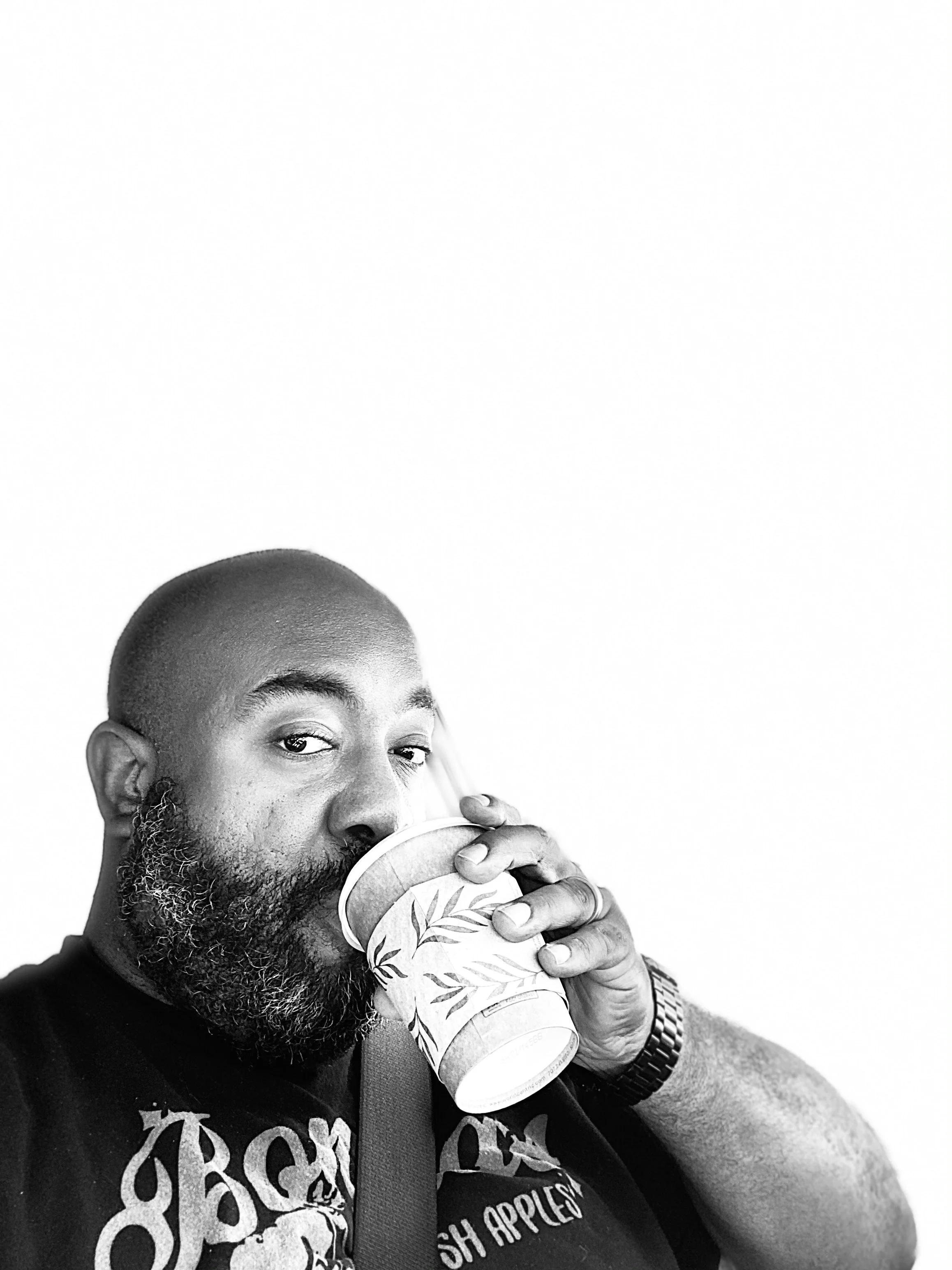
Sometimes you just need to bite them to let them know who’s boss
(From my early parenting diaries)
Children have triggers. It may be a place, a situation, or a person, but when they are triggered, they go bananas. Don’t let anyone (aside from me and a few people in our circle) try and talk to my wife when our daughter is around. It’s like she was raised without any parents; like she was in the wild, chilling with squirrels. She gets loud, will push and hit, and becomes a…pint-sized demon. I’ve looked at her during one of these moments and had no idea who she was. How can someone so gentle and compassionate turn into…whatever the hell she is in those moments? With me, she loses it in the grocery store. While these incidents happen less frequently, there were times when I just wanted to leave her for security and continue with the shopping. Cereal boxes fly off the shelves, cans roll down the aisle, apples are bitten into and discarded—and as frustrated as I have been, I never once thought that she owed me good behavior. The older she gets, there will be more behavioral expectations placed on her, but the idea that she owes me being good does not sit well with me.
One day my daughter and I were shopping. I’m always ridiculously tense when we shop, as I have no idea how she is going to behave. She was an absolute angel. She helped put things in the basket, did not get upset when she was told ‘no’ after asking for things, and we had a nice conversation about her excitement with attending kindergarten in a few months. When I turned my back to grab some soymilk, I heard an enormous crash and a scream that sent a shiver all through me. Sadness immediately set in and I felt tears well in my eyes. I thought to myself, “I knew it was too good to be true.” I turned around and my daughter is pointing, mouth wide open, at this boy who had just lost it. His mother is crying, shoulders and spine stooped in defeat. It is very rarely appropriate to interfere on behalf of a parent you don’t know, but the mother looked shell-shocked. It looked as if she could not even comprehend what was happening. But then, something activated her and she snatched the boy up with a speed that was damn near superhuman. She popped him in the cart and went off on him. While she said a lot, the following is verbatim and impacted me in a huge way: “Why? Why can’t you just be normal for thirty minutes? All the stuff you get, and you cannot be good? You cannot be good for thirty-damn-minutes? After all the sacrifices I make for you.” It was the word ‘sacrifice’ that hit me. Many of us parents say we don’t, but we do, judge the parenting styles of others. So when she told her five-year-old looking son that she makes sacrifices for him, I immediately went into judgment mode, but then pulled back. I didn’t know her story, so I had no idea where she was coming from. But the idea of sacrificing anything for my daughter was like having a popcorn hull stuck in my teeth.
When I think of sacrifice, I think of Abraham and Isaac. I think of having to give up something that I dearly love for something else. To me, sacrifice always denotes a profound loss, or something given away. The meaning of the word has changed over time, but I experience the word as the foundation of a kind of deficit. I don’t want to think of anything related to my child as a loss. I’ve made choices, some have been very hard, but they’ve been choices. I have never once thought of anything that I have done for my kid as any type sacrificial act.
Isn’t it our jobs to ensure that I children know more, have more, and experience more than we did? Aren’t we building foundation and infrastructure for their future successes? Yes. That is how I view my parenting…despite how many trips I cannot take because of how much it costs for my daughter to have all she needs. But these are the choices her mother and me make for love.
As we were leaving the store, my daughter asked me: “Do I look like that when I act bad at the store?” Yes, I told her. You’ve actually looked much, much worse. “That’s not cool, daddy. I won’t do that again.” I hugged and kissed her and told her if it came down to it, I would deal with much worse—but she better not take it there. I make choices, I told her. And I’m doing my best to make the right ones.
Intergenerational Wisdom aka My Grandpa Knew What He Was Talking ‘Bout
My grandfather (RIP) did not talk much. But when he did, I made sure that I listened—even if I had to eavesdrop. To this day, his words about finding a woman and being a father are my foundation. His words and delivery were simple, but were twin icebergs: a little on the top, a whole lot more beneath the surface.
On finding the right woman: “She should make your insides smile. The nice hair, bosom, hips and legs are great…until they aren’t. If your penis smiles before your heart does, you won’t be together for long. If you are together for a long time, it won’t be quality. You have to look at her and the heat starts in your chest and moves through the rest of your body. Not lustfully, but you want to lay with her and watch her sleep.”
On parenting and relationships: “You cannot be around each other all the time. If you’re up under each other every day, what are you going to talk about? How are you going to surprise each other? You even need to be away from your kids. The time we spend together should make sense. I want it to mean something. The only way for this to happen is if I get the hell away from all of you, just for a little while. Then, when we are together, we can be interesting to each other. Why do you think I go fishing so much?”
This second point was appropriate and useful when I met this young couple, about to have their first child.
The way this young brother looked toward his very pregnant girlfriend was beautiful. As she waddled into the restaurant his eyes followed her, a smile on his face. Easy to imagine he was trying to will his love into her and the baby she carried. He turned to look at my daughter as she giggled and drank hot chocolate, and his smile got even bigger. He asked me, “Anything I need to know before mine comes? Any rules?”
When most parents speak to new or soon-to-be parents, they always point out the negatives, “You’ll lose sleep,” or, “You won’t believe how much money you will spend.” These things can be true, but there is so much more to being a parent than the minor discomforts that so many magnify into gigantic problems.
I shared with him what my grandfather told me, and then explained that there were very few rules for being both a good partner and being a good father:
Be honest
Be attentive
Be curious
Be faithful
Be loving
The one ‘Be’ that is never emphasized (in the way that I feel it should be) is: “Be Yourself.”
You are never just a father or a partner or a husband, I told him. It is always you ‘and’. You and your baby, and you and your partner. You and your job, and you and the million and one daily responsibilities you have to attend to. In the midst of all of this, it is remarkably easy to lose the core of yourself—lose the reason why your partner fell in love with you in the first place.
When I saw his smile creep southward, I clarified what I meant.
Whatever you did before starting a family, find a way to continue doing it. If you wrote, you have to continue writing. If you played an instrument, keep playing. It may seem that the time is not there, but it is. You just have to make some pointed choices. And the most pointed choice you have to make is when and how much time to spend time with your family. This may seem antithetical to family life, but it is the very thing that will make you a more effective parent and partner.
I acknowledged that what I was saying was contradictory, but necessary. So much of the anti- male propaganda routinely disparages our abilities to raise children or be effective partners. So, to combat this, many of us overcompensate by being around all the time. We allow no space between us our families, and then we begin to resent our families for not allowing us to ‘do us’. The problem is that we are holding ourselves back. We are the barriers to engaging in the activities we enjoyed before our lives changed in this monumental way.
You have to make the time to keep that special part of you alive. Whether you get up earlier, or stay up later, you have to continue to ‘do you’ (as long as it doesn’t reflect negatively on your family). If not, as my grandfather said, your time with your family won’t mean anything.
Forgive So You Can Have A Better Future
“It's kind of a tough admission to publicly declare, but what others perceive as my being a ‘great parent’ is motivated by fear. I'm afraid that I'll be the parent my parents were.”
My parents should have never been parents. While I am thankful they got together and had me, this is about as far as I will go in my praise of them. I am not going to spend the length of this column disparaging them. I will offer that my mother valued her string of boyfriends over her son, but suffered under their multiple right-hooks. I met my father a handful of times and the final time I saw him, we got into a fistfight. He wanted to see “what kind of man” my “silly country girl” mother was raising.
It's kind of a tough admission to publicly declare, but what others perceive as my being a ‘great parent’ is motivated by fear. I'm afraid that I'll be the parent my parents were.
It would be terribly easy to list the horrible events that comprise my memories of childhood. Anger, fear, lack of attachment, loneliness, violence and uncertainty swirled around me like seductive phantoms, inviting me to embrace and normalize the despair. But the bad events are not nearly as important as how I eventually responded to them. I distinctly remember being in a couch cushion fort, praying to a God I was not too sure existed at the time, and promising that I would raise my kids better than my parents did. “God, if I have kids, I promise you that I will always love them. They will always have enough to eat, and they will always be able to go on field trips at school.”
At first, everything I did was in reaction to how I was raised. I’d force myself to do the opposite of what my parents did, and what I imagined they would do. But you cannot live a life; have a life, based on anger-fueled reactions. The only thing that I accomplished was burning myself out. Being angry while allowing negative thoughts to constantly occupy your mind is not only exhausting, but it is deleterious to your future relationships. The shift in this mode of thinking came when I did something that I thought I would never do—I forgave my parents.
When my daughter came along, I was still in my reaction phase. I made concrete plans, plans to not make the same mistakes that my parents did. Parenting is not a concrete activity. If you cannot be flexible in your parenting style, you run the risk of making similar mistakes to the ones that you are so ardently trying to avoid. The more steadfast I was in my ways, the further and further I pushed my wife away. I pushed her so far away that we were about a half-inch from divorcing not more than two years prior to this writing.
The turning point came when I did a kind of review of my life and took the time to actually look at the good things that have happened, instead of magnifying the bad: I worked hard to get all kinds of alphabet behind my name; the house is nice and livable, the cars are nice, the refrigerator is stocked, the daughter is in gymnastics, Capoeira, and other classes, and I have a decent job. I had never done this before, and it is truly bothersome that it took the near-implosion of my marriage to realize that I had it pretty good—although something continued to stifle my ability to truly (and without judgment or qualification) appreciate what I had, and what I had to offer. Some kind of weight was still holding me down.
I wish I could tell a beautiful story about how I had some kind of cosmic epiphany, heard God’s own chimes, or was visited in the night by an angel who gave me the wisdom needed to be the better person I was supposed to be. It was a bit more boring than that.
I thought about the abuse, the absences, and all the rest and came to terms with the idea that my parents weren’t perfect, I had no right to expect them to be, and I was on an upward trajectory, despite my past. I thought about the future that I wanted with my wife and child, and forgave my parents. Simple, yet powerful. Weight lifted.
While I am still attacked by childhood memories that coax me into becoming angry, I now have the presence of mind to see them for what they are: Recollections of a past life that I am no longer living.
I smile at them, wave, forgive my parents (yet again) and keep it moving into a brighter future.
![Forgiveness Is A [Necessary] B!t$h](https://images.squarespace-cdn.com/content/v1/68ae169a656394318dd712cf/1763828378567-LBZ5AGV54UH7QYTWEQG3/IMG_1758.jpeg)
Forgiveness Is A [Necessary] B!t$h
My parents should have never been parents. While I am thankful they got together and made me, this is about as far as I will go in my praise of them. I am not going to spend the length of this column disparaging them. I will offer that my mother valued her string of boyfriends over her son, but suffered under their multiple right-hooks. I met my father a handful of times and the final time I saw him, we got into a fistfight. He wanted to see “what kind of man” my “silly country girl” mother was raising.
It's kind of a tough admission to publicly declare, but what others perceive as my being a ‘great parent’ is motivated by fear. I'm afraid that I'll be the parent my parents were. Event this far into the game.
It would be terribly easy to list the horrible events that comprise my memories of childhood. Anger, fear, lack of attachment, loneliness, violence and uncertainty swirled around me like seductive phantoms, inviting me to embrace and normalize the despair. But the bad events are not nearly as important as how I eventually responded to them. I distinctly remember being in a couch cushion fort, praying to a God I was not too sure existed at the time, and promising that I would raise my kids better than my parents did. “God, if I have kids, I promise you that I will always love them. They will always have enough to eat, they will always get the toys hey want, and they will always be able to go on field trips at school.”
At first, everything I did was in reaction to how I was raised. I’d force myself to do the opposite of what my parents did, and what I imagined they would do. But you cannot live a life; have a life, based on anger-fueled reactions. The only thing that I accomplished was burning myself out. Being angry while allowing negative thoughts to constantly occupy your mind is not only exhausting, but it is deleterious to your future relationships. The shift in this mode of thinking came when I did something that I thought I would never do—I forgave my parents.
When my daughter came along, I was still in my reaction phase. I made concrete plans, plans to not make the same mistakes that my parents did. Parenting is not a concrete activity. If you cannot be flexible in your parenting style, you run the risk of making similar mistakes to the ones that you are so ardently trying to avoid. The more steadfast I was in my ways, the further and further I pushed my wife away. I pushed her so far away that we were about a half-inch from divorcing not more than two years prior to this writing.
The turning point came when I did a kind of review of my life and took the time to actually look at the good things that have happened, instead of magnifying the bad: I worked hard to get all kinds of educational alphabet behind my name; the house is nice and livable, the cars are nice, the refrigerator is stocked, the daughter can pursue any interest she has, and I have a decent job. I had never done this before, and it is truly bothersome that it took the near-implosion of my marriage to realize that I had it pretty good—although something continued to stifle my ability to truly (and without judgment or qualification) appreciate what I had, and what I had to offer. Some kind of weight was still holding me down.
I wish I could tell a beautiful story about how I had some kind of cosmic epiphany, heard God’s own chimes, or was visited in the night by an angel who gave me the wisdom needed to be the better person I was meant to be. It was a bit more boring than that.
I thought about the abuse, the absences, and all the rest and came to terms with the idea that my parents weren’t perfect, I had no right to expect them to be, and I was on an upward trajectory, despite my past. I thought about the future that I wanted with my wife and child, and forgave my parents. Simple, yet powerful. Weight lifted.
While I am still attacked by childhood memories that coax me into becoming angry, I now have the presence of mind to see them for what they are: Recollections of a past life that I am no longer living.
I smile at them, wave, forgive my parents (yet again) and keep it moving into a brighter future.
My family deserves it.
Yours does, too.
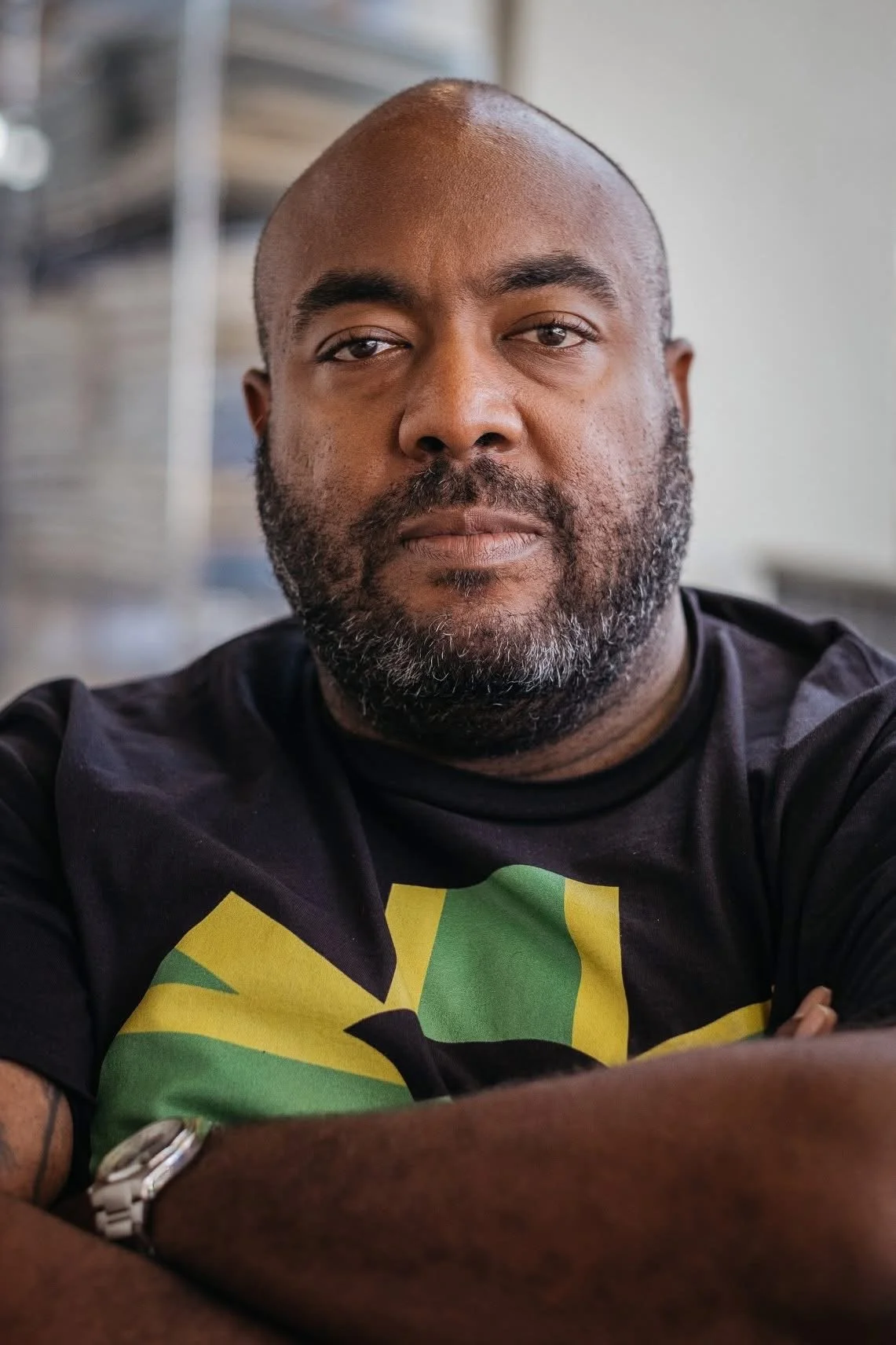
Do It For Yourself. You Deserve it.
“If your penis smiles before your heart does, you won’t be together for long. If you are together for a long time, it won’t be quality. “
It is so easy to lose who you were before you became a dad. If you lost being an asshole, that’s cool. But if you lost the part of you that was adventurous, exciting, etc—you have to get back to that. F’real.
My grandfather (RIP) did not talk much. But when he did, I made sure that I listened—even if I had to eavesdrop. To this day, his words about finding a woman and being a father are my foundation. His words and delivery were simple, but were twin icebergs: a little on the top, a whole lot more beneath the surface.
On finding the right woman: “She should make your insides smile. The nice hair, bosom, hips and legs are great…until they aren’t. If your penis smiles before your heart does, you won’t be together for long. If you are together for a long time, it won’t be quality. You have to look at her and the heat starts in your chest and moves through the rest of your body. Not lustfully, but you want to lay with her and watch her sleep.”
On parenting: “You cannot be around each other all the time. If you’re up under each other every day, what are you going to talk about? How are you going to surprise each other? You even need to be away from your kids. The time we spend together should make sense. I want it to mean something. The only way for this to happen is if I get the hell away from all of you, just for a little while. Then, when we are together, we can be interesting to each other. Why do you think I fish so much?”
This second point was appropriate and useful when I met this young couple, about to have their first child.
The way this young brother looked toward his very pregnant girlfriend was beautiful. As she waddled into the restaurant his eyes followed her, a smile on his face. Easy to imagine he was trying to will his love into her and the baby she carried. He turned to look at my daughter and I as we giggled and drank hot chocolate and his smile got even bigger. He asked me, “Anything I need to know before mine comes? Any rules?”
When most parents speak to new or soon-to-be parents, they always point out the negatives, “You’ll lose sleep,” or, “You won’t believe how much money you will spend.” These things can be true, but there is so much more to being a parent than the minor discomforts that so many magnify into gigantic problems.
I shared with him what my grandfather told me, and then explained that there were very few rules for being both a good partner and being a good father:
- Be honest
- Be attentive
- Be curious
- Be faithful
- Be loving
The one ‘Be’ that is never emphasized (in the way that I feel it should be) is: “Be Yourself.”
You are never just a father or a partner or a husband, I told him. It is always you ‘and’. You and your baby, and you and your wife. You and your job, and you and the million and one daily responsibilities you have to attend to. In the midst of all of this, it is remarkably easy to lose the core of yourself—lose the reason why your wife/partner fell in love with you in the first place.
When I saw his smile creep southward, I clarified what I meant.
Whatever you did before starting a family, find a way to continue doing it. If you wrote, you have to continue writing. If you played an instrument, keep playing. It may seem that the time is not there, but it is. You just have to make some sacrifices. And the primary sacrifice you have to make is time with your family. This may seem antithetical to family life, but it is the very thing that will make you a more effective parent and partner.
I acknowledged that what I was saying was contradictory, but necessary. So much of the anti-black male propaganda routinely disparages our abilities to raise children or be effective partners. So, to combat this, many of us overcompensate by being around all the time. We allow no space between our families, and us and then we begin to resent our families for not allowing us to ‘do us’. The problem is that we are holding ourselves back. We are the barriers to engaging in the activities we enjoyed before our lives changed in this monumental way.
You have to steal the time to keep that special part of you alive. Whether you get up earlier, or stay up later, you have to continue to ‘do you’ (as long as it doesn’t reflect negatively on your family). If not, as my grandfather said, your time with your family won’t mean anything.
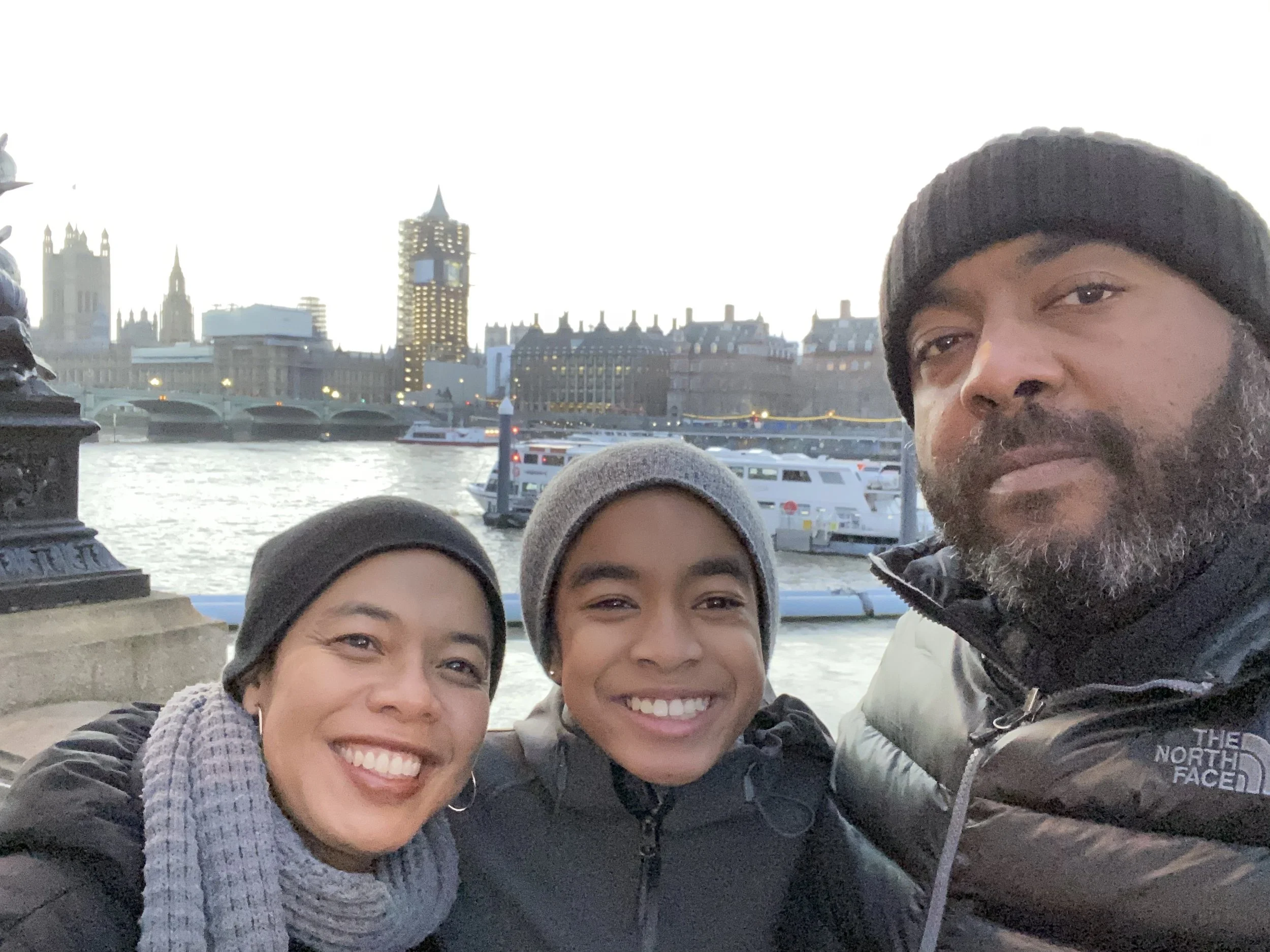
The Legacy of Poverty
“My wife and I grew up in pretty rough circumstances. My daughter’s life has been fantastically privileged.”
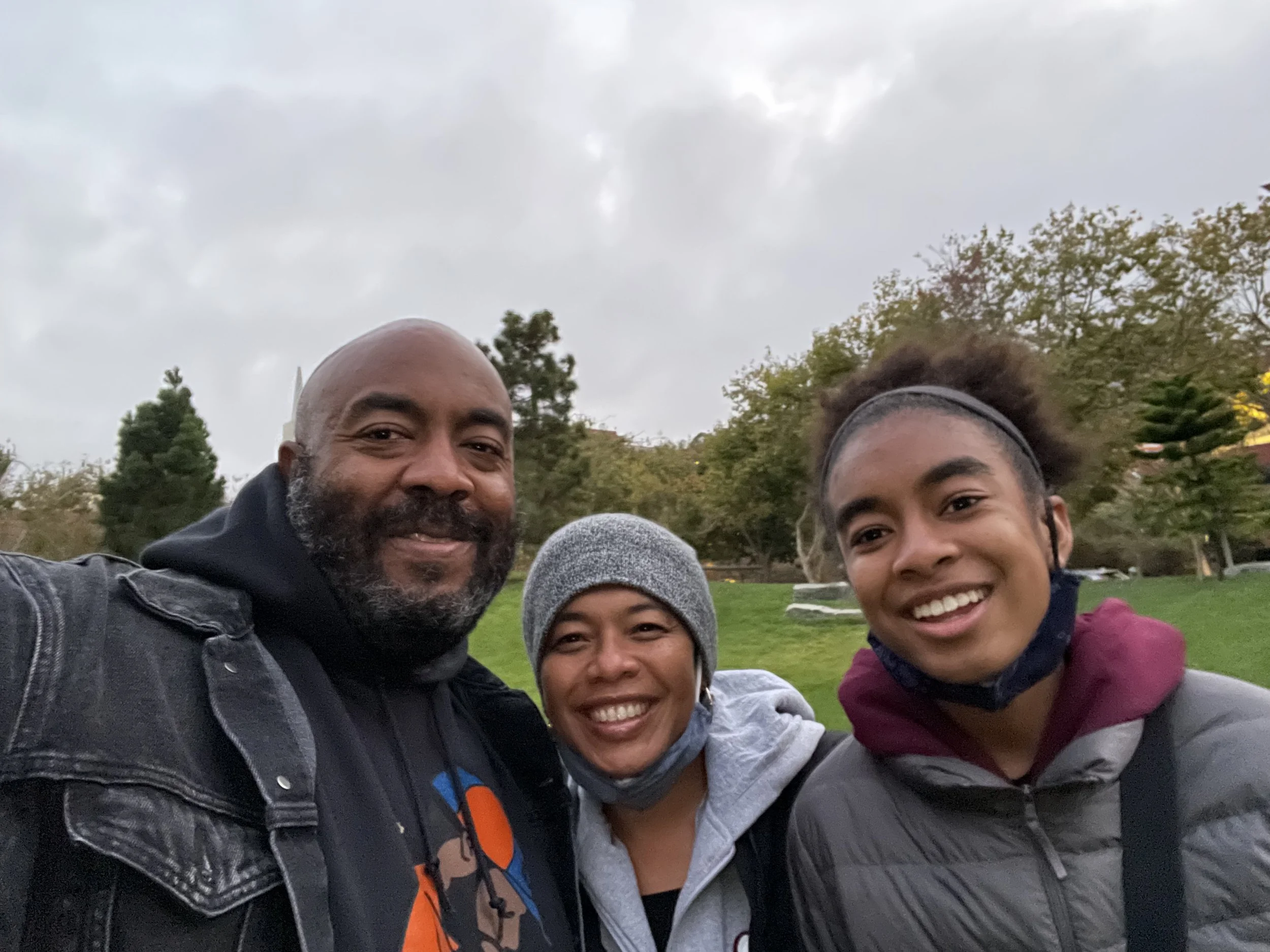
(From my COVID diaries)
Poverty is traumatic. I was violently poor for half my life. I’m talking about the homeless, living in random basements, rats chewing on my arm (still have a scar) type of poverty. The type of poverty where you cannot see any hope or worth in yourself or your family, but an unexpected Skor bar was as if Jesus himself crafted a meal for you. As with most traumas, I was able to develop some coping skills (some maladaptive, some still useful) that helped me to survive; that are helping me to survive in our new and collective pandemic reality. My daughter has none of these skills—and I think I’m doing her a disservice. We’ll get to that.
My wife and I grew up in pretty rough circumstances. My daughter’s life has been fantastically privileged.
My wife is an orphan. By all accounts, her parents were loving and engaged people with ties to a larger community. So, when her parents passed, she was able to cobble together a semblance of normalcy by floating from family to friends to family to friends to teachers who loved her to university to graduate school. I’m not saying this wasn’t hard for her, it was, but she had a particular kind of resilience, certain skills that I see my daughter exhibiting: there’s a goal, I have resources, let me use those resources to make it happen for myself. I wasn’t so lucky.
I grew up in a violent single-parent household. My mom’s boyfriends would beat her and me. One time we were beaten so badly that both of us wound up in the hospital at the same time. My mother was also very abusive to me, physically and emotionally. She never helped with homework, never let me go on field trips. She wasn’t religious, but used the religion of her mother as justification for her abusiveness. We never shared a hug. There was never any money for things I needed, so I became a thief at a very early age. The handful of things she did that could be considered loving, that I can remember, is that she came to my high school graduation, one of my choral concerts in 9th grade, introduced me to comic books (by giving me a stack to read and then disappearing with one of her boyfriends for a week, over the Christmas break), and letting me crash on her floor when I needed. It hurts me that I can identify specific actions, and that love and kindness and support weren’t her baseline operating system.
I met my father 7 times in my life. The last time we saw each other, we got into a major fistfight. Broken bones were involved.
My childhood forced me to develop survival skills that are perfect for this time. Out of context, they aren’t healthy: I’m able to be by myself for long periods of time, doing absolutely nothing. I can make a small amount of food stretch for an entire day. I can make meals from what others toss out. I can and will hold firm (sometimes violent) boundaries. I can be profoundly pessimistic so all of the bad news of new #COVID19 cases and deaths from the disease don’t hurt or scare me every single time I hear the numbers. I can take an unusual amount of pain and abuse and alchemy it into something normal and expected, mundane and routine. I’m trying not to fall back into or utilize these unless I have to, but with all the misinformation and mishandling of our shared crisis, I’m (as usual) preparing for the worst. And my daughter has no idea what ‘worst’ is.
My daughter knows nothing about survival. She’s only known thriving. My wife and I made sure that she wouldn’t ever have to struggle like we did. My daughter opens the fridge and the light comes on and there is always food in there. There’s food and snacks in the cupboard. She turns the faucet and water always comes gushing out—just put it through the Brita filter before drinking it. She has the clothes she needs and sometimes wants. We’ve advocated for her when her schools were coming up short. She is hugged, kissed, and told ‘I love you’ every single day of her life. She’s been on every fieldtrip she’s wanted to attend. She’s traveled. She understands and appreciates all the ‘do nothing, but chill’ time we carve out for her. And she’s a happy kid. She is the brightest most compassionate light. She will defend herself, if necessary, but she will always try to find the most compassionate and loving solution to any kind of conflict. I don’t want her to be as ruthless as I can be, but I feel that things are going to get way worse before they get better and I want to make sure that she can weather what may happen in the near future. Part of this ‘way worse’ is the reality that, when all of this is as over as it can be, we just might find ourselves in poverty. I don’t think we’ve prepared her for this.
My wife and I have done without, for a good portion of our lives. We’ve made do, separately, and early on as a couple. But now we have a child, and the world looks and feels different. Of course, if Universe forbid, we do fall (back) into poverty, we’ll do all we can to ensure that our daughter has what she needs, that she’s affected the least. Her physical needs will be met as much as we can meet them. I’m afraid that I won’t be there for her emotionally and that it will break her. I’m not sure how her brand of resilience will hold up if one of her anchors isn’t available to her. Survival is a brutal and ugly thing. You have to make compromises—sometimes those compromises will directly challenge your values. Sometimes you have to behave in ways that even those who know and love you might not recognize you—or want to know you.
Maybe the premise of this entire missive is wrong. After writing it all out, I realize that I’m not afraid that my daughter doesn’t have the skills for what’s to come. I’m afraid that I still do—that those skills are razor sharp, just waiting to be used. I’m afraid of who I am when I’m in poverty, when I’m in survival mode. I’m afraid of what I’ll pull out when I reach into my trauma bag. I’m afraid of the compromises and behaviors that my poverty consciousness engenders. I’m still traumatized by living in poverty for so many years and #ParentingInTheTimeOfCovid is one huge trigger.
Hearing about 3 million people applying for unemployment, personally knowing people who’ve had to lay off their entire staff and close their hard fought for businesses freaks me out. My (financial stability) anxiety is through the roof. I’ve made some small investments and put away some savings to weather a little storm. But if this gets any worse, I will do what I have to do. I just hope that it doesn’t take me too far away from the good man I’ve become.
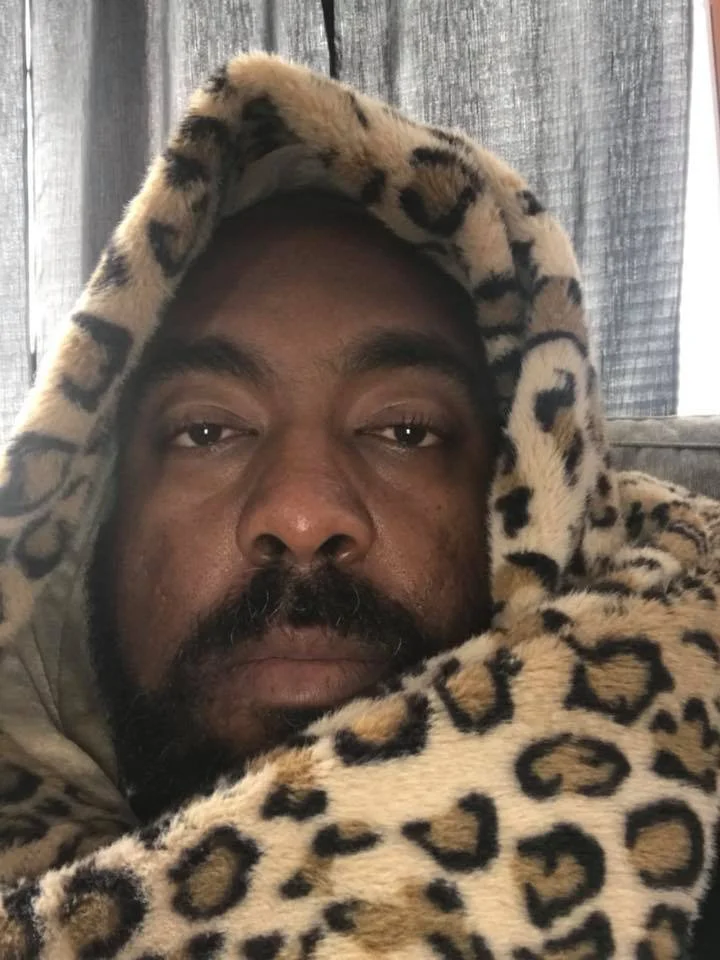
Nature…Now I Get It aka 4 Ways Nature Informs my Parenting
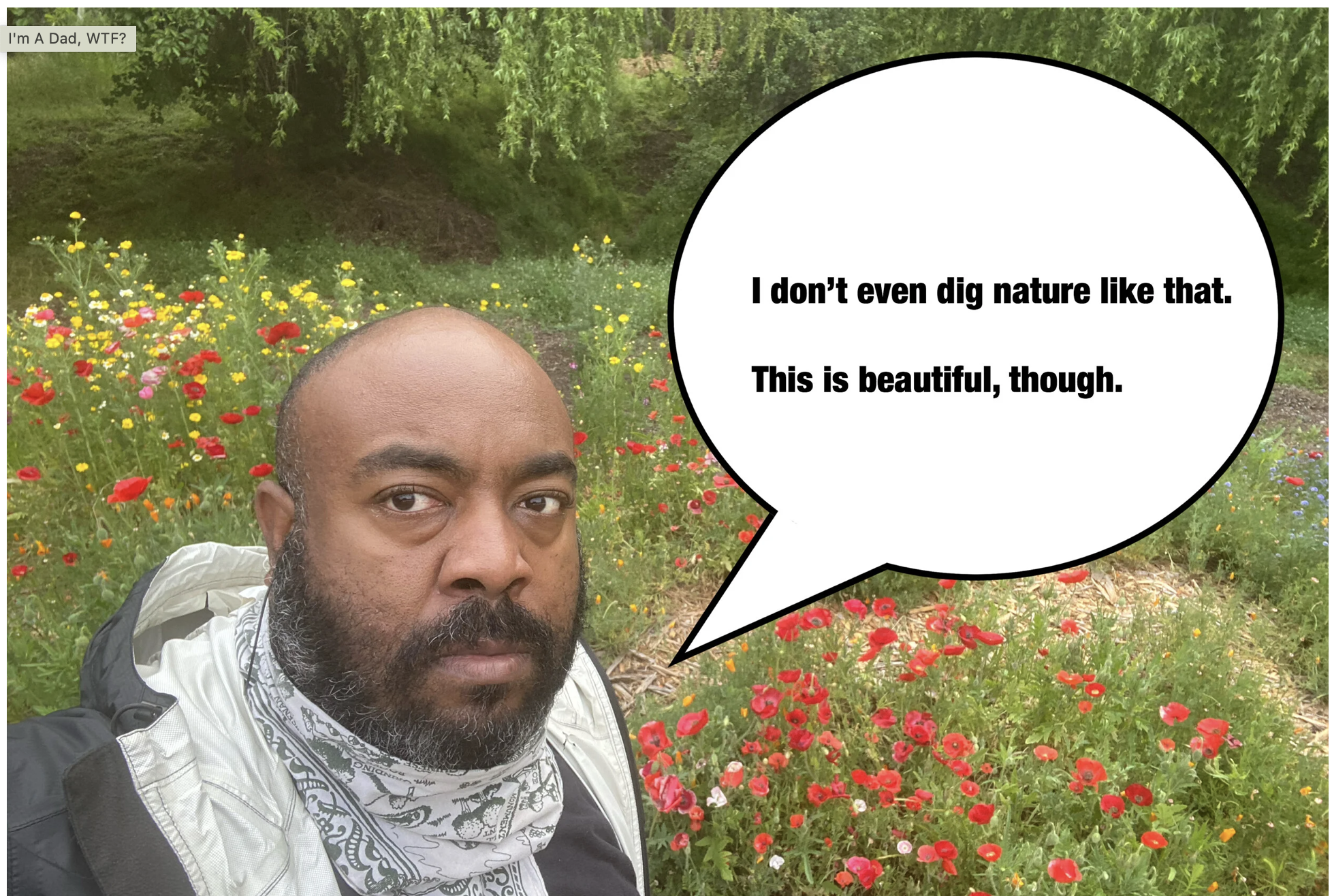
Shawn amongst the California wildflowers
(From my COVID diaries)
I’m a city dude. Born in a major city, lived in major cities all my life. When my wife and I found out she was pregnant, we got a little place in the pseudo-suburbs so we could have a yard (which I’ve never had in my life) and just more living space, with no shared walls. At first, I was lonely. We live in a quiet neighborhood, on an even quieter block. People are friendly, but they don’t really kick it. There’s 10-20 feet between each house, trees line the boulevard; some houses have little library nooks in front (and not a one has been vandalized), and people seem to be more relaxed than our neighbors in the city. Every yard has trees, bushes, all type of flowers…sometimes it stresses me out. I’m used to hustle and bustle, EMS sirens blaring at all hours of the night, the rumble of the train in the background like a comfortable white noise companion.
In my current neighborhood, the ice cream man will stop in front of every house and wait until the kids come out to get something. When I was a kid, change would be wrapped in a scarf or tin foil and tossed out of windows where our eager little hands plucked them from the sky, and then we’d have to chase the ice cream truck for a block or more. It feels so alien. Still. After 12 years of living here.
Those past days, those previous neighborhoods, were energy: danger, love, excitement, and terror all at the same time, played out on concrete, steel, and glass. Now it’s some terror (my family is one of the few chocolate chips on a very large cookie, and there are tons of animals around: deer, possum, raccoons, a mountain lion once in a while, and birds. All the damn birds there ever was, chirping all day) and sneezing. Lots and lots of sneezing. All this blooming greenery and flowers unfolding wreaks havoc on my allergies. Never experienced any allergies until I moved out to the pseudoburbs.
When I tell people where I live, almost uniformly, the excited responses mention how close I am to the Bay and all the parks I can hike in. Many express lighthearted jealously that I’m so close to all that nature. During one conversation, I told someone that I’d never been to any of the parks they mentioned. They looked at me like I violated some sacred trust.
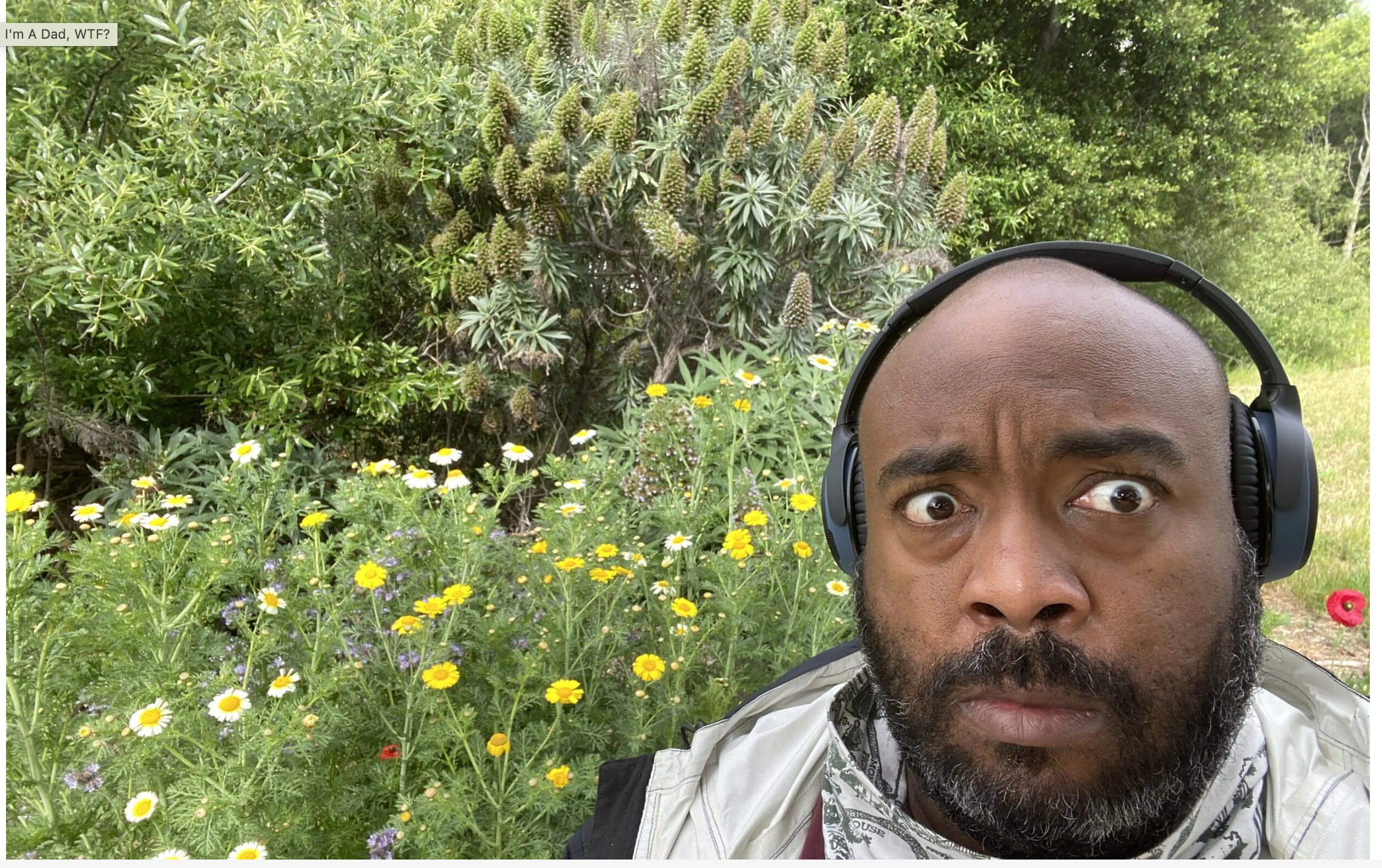
I heard something rustling, back there.
Flash forward a year, and we’re in the middle of a government mandated shelter-in-place order due to COVID-19 (the Corona virus). Everything is shut down and there isn’t (for a guy like me) anything to do. So, fueled by boredom and the desire to not put more weight on an already taxed frames, I decided to explore the Bay and all those magnificent parks folks crowed about.
I am transformed.
Only twice before—seeing Prince in concert and witnessing my daughter being birthed—have I felt something like a transcendent religious experience. While being fully immersed in nature still makes me a little nervous, I finally understand why so many people get their entire lives by being in it. I’ve been walking in various parks and shorelines for five weeks, close to 140 miles of walking in nature. Gives a man time to think. My walks have done for me what all those years in undergrad and grad school philosophy and religious studies courses couldn’t—an incredible sense of wonder and how I have a duty to protect and share that wonder.
Here are four things I’ve learned from walking in nature, four to five miles every single day, and how these things have informed my parenting.
1-We are all radically interconnected. As if COVID hasn’t already shown us this. But I’ll go another way. I was walking on a path near the shore on Monday when I felt a crunch. I’d killed a snail that was out after the rain we had. For some reason, I was overwhelmed with guilt. My not paying attention caused me to hurt (kill) something. A hard lesson, but being mindful and intentional about how we move through the world is important. Most of us are on autopilot and when we aren’t challenged about our actions and intent; we go about things business as usual. Causing damage along the way. I want my daughter to be more mindful how she negotiates our shared world. I want her to know to adjust her steps before killing the snail.
2-Slow down. Never had to drive until I moved to California. Now I’m in the car all the damn time, rushing from place to place. Sheltering-in-Place has forced me to slow way down. I’ve noticed things in the past five weeks that I’ve never noticed before, even though I’ve been by these things hundreds of times. I hope I can teach my daughter to take her time. Not be too methodical, but to allow herself the luxury of really getting to know and understand something, know and understand people, instead if just rushing, trying to get to the next thing. See the thing or the person for what is, not as an obstacle you have to overcome to get to the next. This will come in handy with her homework. She rushes, trying to get to the next assignment. I want her to slow down and see homework as a privilege and not as some kind of adversary barrier to overcome, only to reach another barrier to overcome.
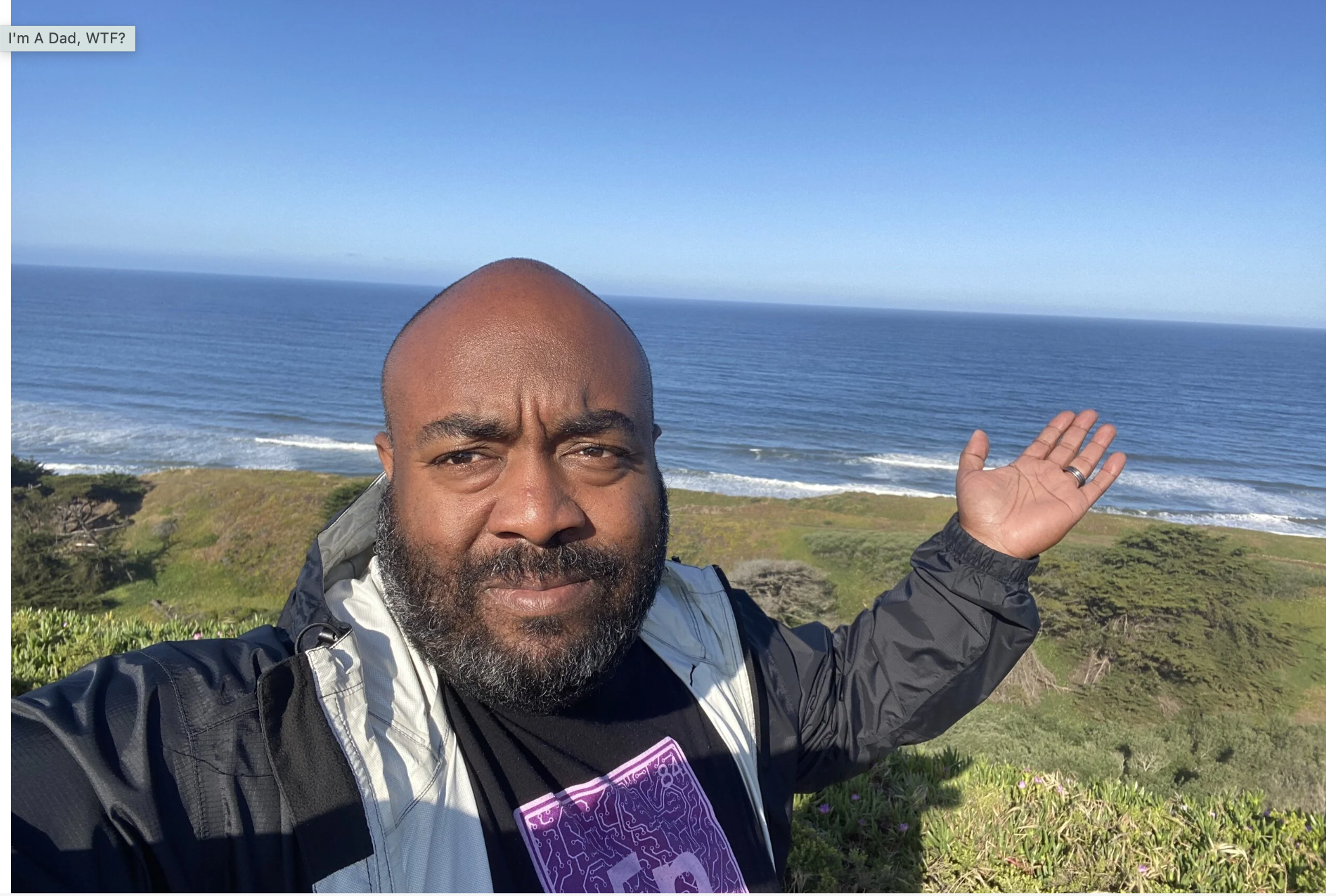
3-Beauty matters. Nature is gorgeous, my G. I have a form of colorblindness where I can see colors, but have a really difficult time discerning different shades/tones of the same color. But nature gives me so much visual, auditory, and tactile information that I don’t think I’m missing out on anything. It’s overwhelming, but in a good way. Beauty matters. It can take your breath away as well as give you life. I was walking near the ocean (see photo below) and I saw a cigarette butt and got angry. What kind of moron would spoil this beautiful scene by throwing their filthy chemical-filled garbage on the ground? I picked it up and tossed it in a trashcan later that day. Never in the history of ever have I picked up some strange mouth-touched garbage and tossed it in the appropriate trash receptacle. Nature’s beauty is worth it. My kid knows this because after witnessing me pick up the nasty thing, she nodded and mouthed ‘thank you’. As parents, one of our jobs is to make sure our kids have a healthy and clean world to grow into—that they are able to experience the beauty of nature like we’ve been able to…despite some of us understanding this late in life.
4-It ain’t about the money. I grew up violently poor. Once I got some money, I spent the hell out if it. I never saved. I wanted to know what it felt like to walk into a place and buy what I wanted instead of stealing it, or crying that I couldn’t have it. For a long while I had an unhealthy relationship with spending. I had to have all the books, all the DVDs, all the records and CDs. I had to see every movie on opening night, go to as many concerts as I could, but before I went to the concerts I had to have the newest and flyest clothing. When I got married, I had the same mentality. When we had our daughter, same thing. My kid had everything—but I was working so damn much that we didn't really spend as much time together. She’s never told me how much she liked something I bought her. But she can’t stop talking about the four baby deer we saw on our walk. We saw those deer three weeks ago and she’s still bugging out. Money is great. It provides access, stability, and security. I’m very lucky to have a house and a car and health insurance and money in the bank. But they are necessities. They don’t give me that Marie Kondo that nature has been giving me. Spending time > spending money.
Will I be the same nature dude after the shelter in place? I hope so. If I can’t be fully immersed, like I have been, I have to make sure that nature is part of my living practice. Journal, meditate, read, get my black ass in nature. I’m getting the vibe that so much of the future well-being of me and my family depends on our relationship with nature. Looking forward to seeing how this will play out.
Sometime You Just Want To Smack Some Responsibility Into Them
Family, I got heated a while back Let me set the scene for you: Several times per week, I meet a few guys at a café to talk. We talk about any and everything; nothing is off limits. There have been major disagreements, but very little out-and-out hostility. That is, until that day. Normally, the crew stays the same: the same five professionals, enjoying coffee and conversation, before we shuffle off to the trenches of our chosen professions. That morning, however, a dude was there who was unfamiliar to me, but was a good friend of a friend, so I labeled him crew by association. We’ll call this new dude, “AJ”.
AJ was asked, ‘Whatever happened to [a former lover of his]’? After taking a long swig of coffee, he shook his head and stated in an exasperated chuckle, “That bitch lied about being on the pill and tried to trap me with a baby.” I had several strong reactions to this. I found his entire statement offensive, but I’ll break it down for you why I was ready to smack him.
I’m not a real big fan of misogyny. He already put me off by calling this woman a ‘bitch’. I’m not one to police words or emotions, and I will defend the First Amendment with my dying breath, but for real? ‘Bitch’ is a word that I have worked to purge from my vocabulary. There is no place for describing women like this, especially when it pours forth from a privileged male mouth. [Dude is very rich]
This former lover of his “lied” about being on the pill. Let’s get one thing straight: When you have male-to-female vaginal intercourse, there is implicit consent to a possible pregnancy. If you have sex, without contraception, you are pretty much agreeing to a baby. Calculus it ain’t; biology it is. Men, if you don’t want your lover to become pregnant, wrap it up. If you complain that ‘it doesn’t feel good’ then you are not in the emotional space to have responsible sex, and should abstain. Sex with a condom may not feel as good as unprotected sex, but having a baby that you made no plans for, and don’t want—I guarantee you that this will feel a whole lot worse, especially for the child.
“Trap me with a baby.” Granted, I have known several women who have attempted to get impregnated by a rapper or ballplayer or a wealthy dude so they can have an eighteen-year revenue stream. These women exist. But I feel this is more indicative of how damaging to women’s and girl’s esteem this society can be—telling them that they have no worth, other than bearing babies and collecting checks—rather than some inherent female guile. In regards to babies: Babies aren’t a net that can be tossed on someone to trap them. They aren’t little spike-filled holes in the ground that you stumble into when traipsing through unfamiliar jungles. They are human beings deserving of respect. And if you do not want the enormous responsibility of raising a tiny human, please refer to point 1 above.
I voiced my unease at his statement, giving him a more brief and passionate response than I detailed here. He had the nerve to look at me and say, “Why does the man always have to be the villain?” I called BS.
In the past, I have gone completely out of my way to intellectualize the reasons for men acting beneath themselves. I’d point to systemic racism, inter and intra-generational trauma, socialization (or lack thereof), and a whole host of social ills aimed at men. But this is the worst kind of paternalism, and it disallows for male agency. By absolving so many of our men from responsible behavior, we endorse then being irresponsible. This isn’t to say that the system doesn’t impact men in negative ways. But we do not have to succumb to the obvious jagged paths that certain societal forces are attempting to trick us into following. We do not have to be the same character in the same story. We are in charge. If AJ wasn’t as educationally, gendered, and financially privileged, I might have been able to reach back into my very deep bag of excuses and chalk up his words and behavior to ignorance. But he did not have a single valid excuse, other than his obvious self-elevation over this woman.
AJ, brother, men do not always have to be the villain. It is up to you to chose not to be.
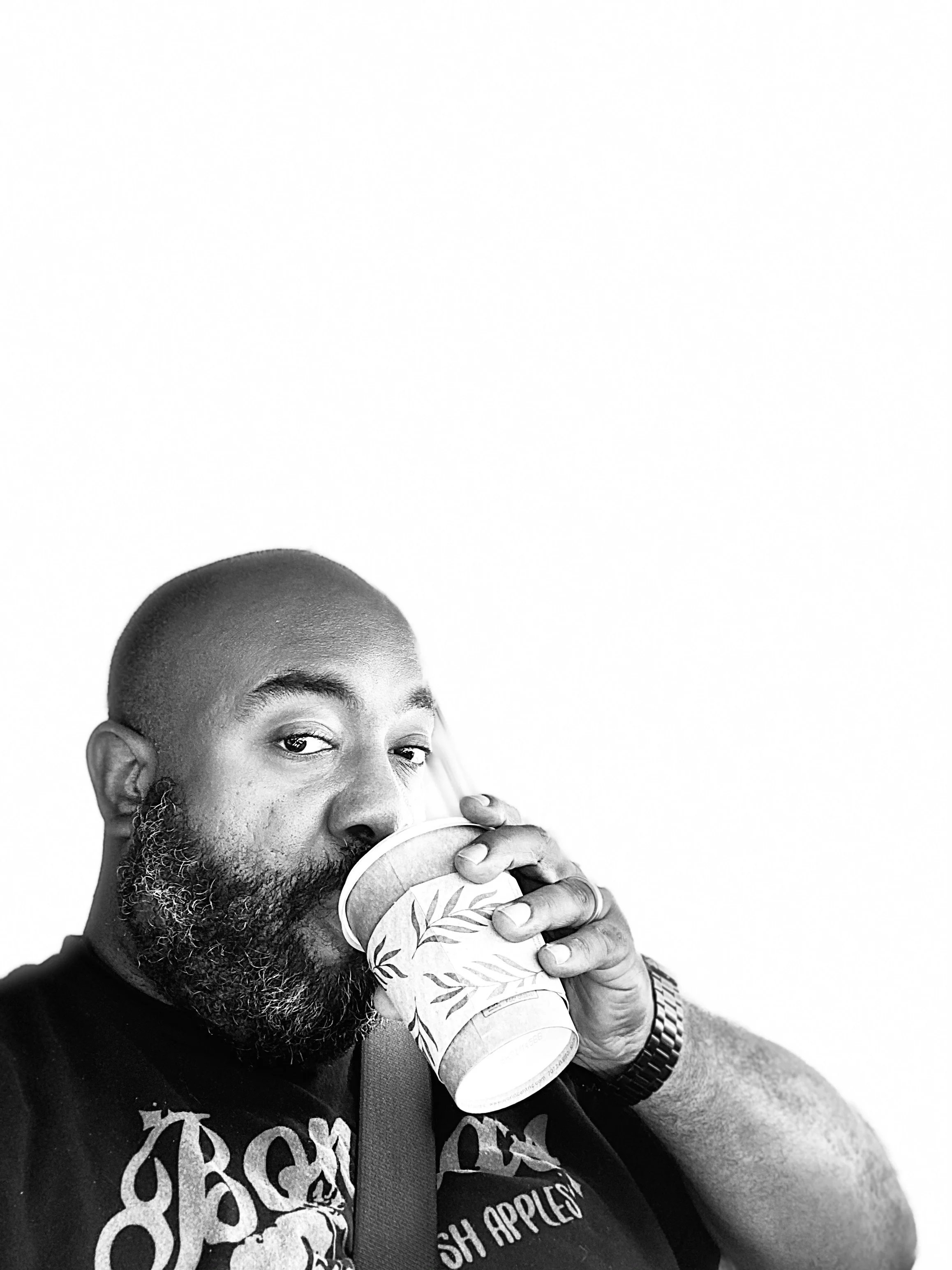
20th Century Dad Raising a 21st Century Kid
I’m old. While I look younger than my actual age (black don’t crack), and I’m getting my mid-30’s body back, and I see the majority of the world through a young lens—I feel myself sliding into that type of old where I’m in a race and the starting pistol went off while I was asleep. Bang! All of the other racers are a quarter of the way around the track and I just woke up, clearing my eyes, shaking the cobwebs out of my head, and seeing nothing but elbows and butts disappear in the distance. But instead of rushing to catch up, I lie back down, take out a newspaper, and read about the results of the race—comfortable with where I am and who I am. I am in no mood to compete. Ever. And it is my kid’s fault.
We were driving the other day, Spotify on shuffle, and the following songs came on in a row: Lauryn Hill’s “Lost Ones”, Black Sheep’s “The Choice is Yours”, and then Lenny Kravitz’s “Fields of Joy.” Being the music nerd that I am, my mind immediately went to when those songs were on were released: 1998 for Ms. Hill, and 1991 for the other two. My kid asks, “Can we listen to Hayley Williams?”
Was this a lightweight diss in regards to the music I loved? Kinda heartbroken, I put on what she wanted to listen to. This incident should not have registered on my life’s radar, but I was struck by my too-strong reaction to my high school senior not enjoying the music I loved. What triggered that feeling? I had to admit to myself that I was a twentieth-century father raising a twenty-first century child.
This isn’t to say that I am a relic, but the older my child becomes, the more nostalgia injects its useless behind into my parenting. Nostalgia is the enemy of progress. It acts as a leash, tethering me to moments in time that are difficult to get past, not unlike trauma. Nostalgia influences me to try and expose my daughter to things that I love under the guise of wanting her to have a healthy cultural diet. My rationale is that I am adamant that she eats healthy foods, why shouldn’t I be just as mindful of the (popular) culture she consumes? But the hard admission is that I’m doing it because I am trying to erect boundaries. I’m trying to control her environment, not expand it. Which is not fair to her because our upbringings are vastly different.
The year that my daughter was born, Barack Hussein Obama was voted into office. The next election, he won again. Despite the very legitimate concerns that I have about some of the actions he took during his time in office, every time my daughter thinks about the face of the most powerful nation on earth, she will envision a black man and his black family. She will envision a black mother and father who publicly show affection, and two young girls who are scandal free. I’m still trying to wrap my mind around that.
She watched Gabby Douglas become the first black woman to win the all-around gold medal in gymnastics at the 2012 London Olympic Games. The Williams sisters are a regular (and dominating) factor in tennis, and she knows who Charles F. Bolden is. She was born into a world where she perceives no limits based on gender or skin color. Quite a bit of the apprehensions I have about limits and barriers are self-generated. They come from my baggage, and it is unfair and irresponsible to put all of that on her.
Of course I want to instill values in my daughter, along with wanting her to follow the rules and expectations that my wife and I deem important. We also role model how we want her to treat others, and how she should expect to be treated. But outside of this, I (cannot speak for my wife) need to allow my daughter to grow in her own way, at her own speed, within her own context.
Parenting is not a lead from the front kind of thing. I can’t show her the world when I’m out in front, blocking her view. It is my job to walk alongside her, pointing out the things that I find useful and amazing; guiding, but not dictating her life. My past should never interfere with her future. At this age, my primary job is to walk alongside her and have her guide me, show me what she finds interesting, what she’s curious about, and never judge when the invites me into her world.
That Hayley Williams is incredible.
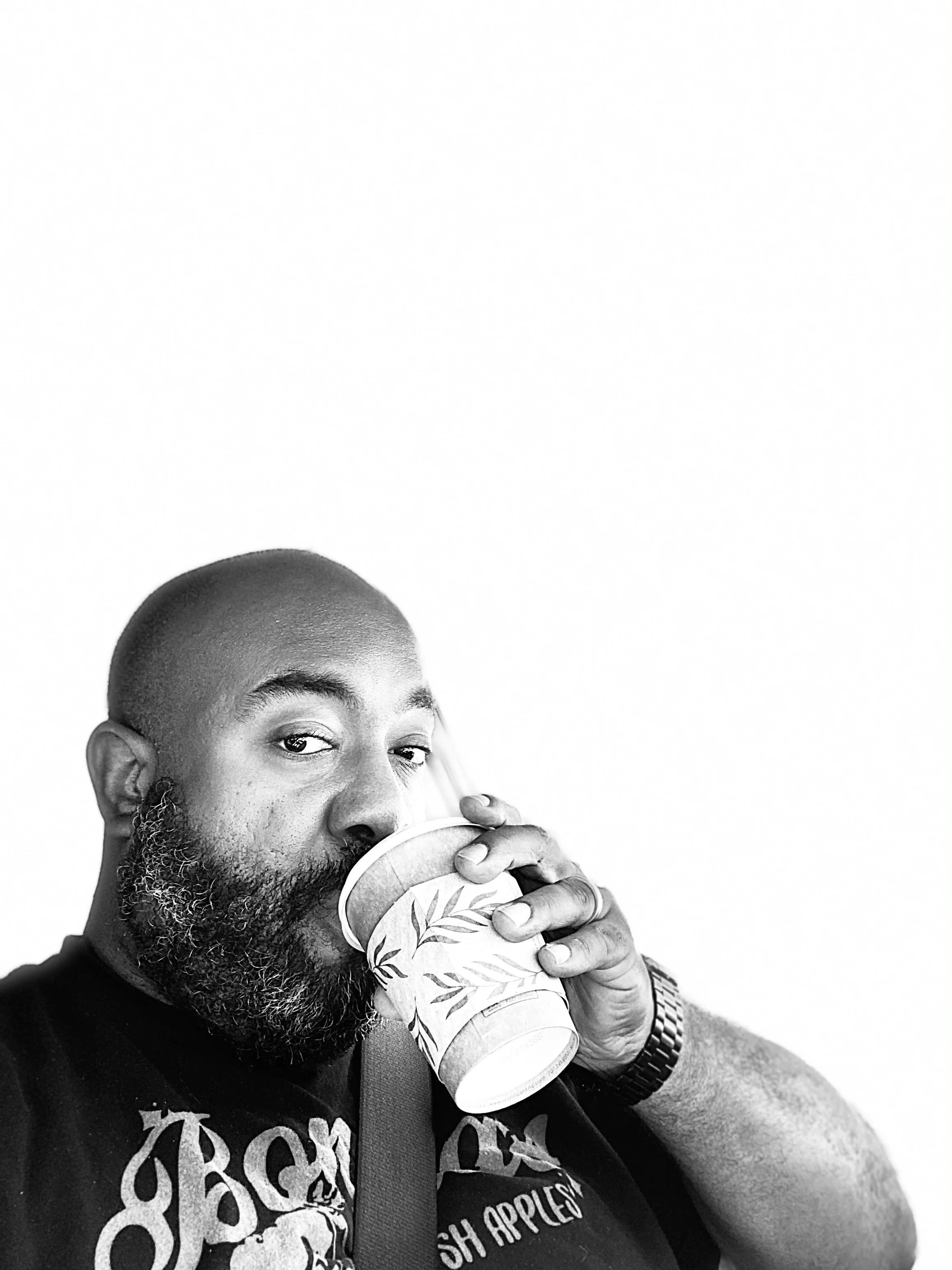
Requiem For Despair
Despair is a bitch because it is so damn sneaky. It approaches you as “being cautious” and settles at the base of your neck. It gives you new eyes and ears to see and hear with; issuing warnings; ‘danger, danger. is everywhere.’
You gain superpowers from despair—a Spidey-sense. You start thinking that you can perceive danger before it happens—also (foolishly) believing that you can do something about said danger. Slowly, you begin to rationalize your ‘being cautious’ by only focusing on the horrors you either hear about, or see on television, or read in blogs.
“It’s just not safe to…(fill in the blank)” becomes your operating system. Danger can lurk any and everywhere. The beauty of darkness becomes an insidious enemy. Strangers are greeted by your ocular threat-assessment. You’re only being cautious, you continually con yourself into believing. Your worldview becomes a series of pre-emptive self-defense strategies. Now that despair has you, it can make itself known.
Slowly, despair sheds its stolen skin and extends tendrils to the base of your spine and it envelops your heart. You’re trapped. Paralyzed by the fear that despair has introduced to you. You can no longer act, only lament. Your throat is tight—heart constricted. You hold your loved ones close and pray—something you haven’t done in years—that nothing of the oh-so-prevailing horrors even touches their periphery.
As I look in my daughter’s eyes, see her smile, despair gets nervous and I feel its tendrils loosen. If I can’t act, how can I be a good father? I inhale the smiles, the beauty, and the laughter—those snaky tendrils loosen further. My daughter hugs me and I feel despair tremble.
I’m ready.